





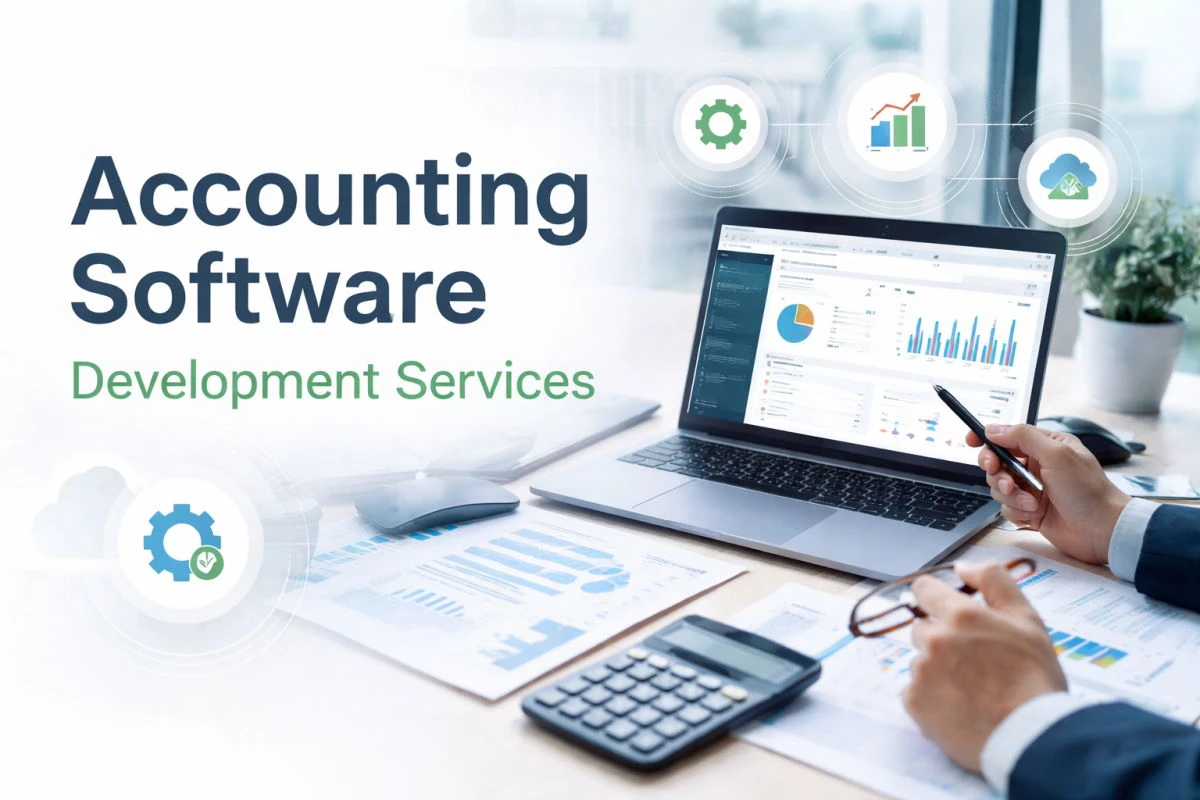
Accounting Software Development Services

planek
planek
planek
planek
planek
planek
planek
planek
planek
planek
planek
planek
planek
planek
planek
planek

    Talk to an Accounting Software Expert

    See how custom accounting software can automate reporting
    accounting software development

    We design and develop custom accounting software that centralizes financial data, automates complex workflows, and integrates with the systems your business already uses.

    Our Python engineers build accounting platforms, reporting tools, financial automation, and API integrations for ERP, CRM, banking, payment, ecommerce, and internal systems. Each solution is designed around your accounting logic, reporting requirements, security controls, and plans for future growth.

    Get a Custom Development Quote

    Map your workflows and integrations needs

    PLANEKS is proficient in developing custom accounting software for companies that require precision, control, and scalability in their financial operations. Our experienced engineering team designs systems that centralize financial data, automate complex accounting processes, and integrate seamlessly with widely used accounting platforms such as Xero, QuickBooks, and Zoho Books, as well as Enterprise Resource Planning (ERP) systems, payment providers, banking platforms, and internal business tools.

    We engineer each solution around your regulatory environment, reporting standards, and operational logic, ensuring accuracy, audit readiness, and long-term reliability. The guaranteed outcome is a secure, transparent, and future-proof accounting system that delivers faster reporting, stronger cash-flow control, lower compliance risk, and clearer financial insight when the business scales.
    google analytics 4

    The companies we work with

    Our Clients

    We work with businesses that have outgrown spreadsheets, disconnected tools, or inflexible accounting platforms. Our solutions support growing SMEs, startups, accounting firms, and enterprises modernizing legacy financial infrastructure.

    Growing SMEs with Complex Accounting Needs

    As businesses grow, accounting complexity accelerates beyond what most prepackaged tools are designed to support. Multi-entity structures, cross-border transactions, custom revenue models, and increasing compliance obligations quickly expose the limits of generic accounting instruments. Our clients in this custom accounting software development category typically struggle with delayed reporting, duplicated work across departments, and a lack of real-time financial insight. Custom accounting systems enable these businesses to automate workflows, compile financial data, and coordinate accounting logic with revenue and cost generation.

    Startups Building Finance Infrastructure from Scratch

    Startups that take future scale into consideration from the outset reduce the need for disruptive replatforming later. Founders and finance leads often require accounting systems capable of handling non-standard billing, investor reporting requirements, or rapid international expansion. PLANEKS helps startups with designing future-ready accounting foundations that support automation, compliance, and analytics from the outset, without overengineering or excessive functionality complexity.

    Accounting Firms that Need Custom Internal Tools

    Accounting firms require efficiency, accuracy, and consistency across multiple clients and reporting standards. Preconfigured tools rarely support internal workflows, review processes, or proprietary methodologies. Custom accounting software development enables a firm to standardize operations, reduce manual effort, and redirect focus toward higher-value advisory services, while precisely maintaining strict data security, auditability, and guideline controls.

    Enterprises Migrating from Legacy Accounting Systems

    Enterprises often depend on outdated accounting platforms that are expensive to maintain, difficult to integrate, and risky from a compliance standpoint. Legacy systems slow down reporting cycles, limit automation, and create dependency on fragile workarounds. We support organizations modernizing their accounting infrastructure by redeveloping core systems with scalable architectures, clean data models, and seamless integrations, reducing operational risk while improving performance and transparency.

    Our solutions

    Accounting Challenges We Help You Solve

    Accounting systems tend to break down as business scale, structure, and compliance requirements outgrow existing tools. Our clients are organizations that recognize this as a risk to financial accuracy and operational control, before it affects workflow control.

    Manual Bookkeeping and Spreadsheet Dependency

    Many growing businesses still employ spreadsheets and manual bookkeeping to bridge gaps between tools. While this approach keeps initial operational costs low and supports basic accounting needs, it introduces human error, slows down the month-end close, and creates single points of failure tied to individual employees. As transaction volume grows, hand-operated processes become fragile, difficult to audit, and increasingly expensive to maintain. We help organizations move away from these constraints by replacing manual work with structured, automated accounting systems that scale cohesively within the future elaboration.

    Errors Caused by Disconnected Accounting Tools

    Disconnected systems force finance teams to reconcile data across multiple platforms, payment processors, invoicing tools, payroll systems, and ERP systems, often with inconsistent data structures. Operational fragmentation leads to inconsistent reporting, slower visibility, and ongoing corrections that reduce confidence in financial information. Custom accounting software eliminates these gaps by centralizing logic and ensuring data consistency within all financial touchpoints.

    Limited Real-Time Financial Visibility

    Obsolete financial data introduces uncertainty into leadership decisions, replacing verified information with assumptions. Delayed reporting obscures cash flow trends, profitability by unit or region, and emerging risks. Our accounting software development company equips you with tailor-made systems that provide accurate, instant tracking, enabling finance teams and executives to act with assurance and avoid after-the-fact responses.

    Difficulty Complying with Tax and Reporting Regulations

    Regulatory requirements continue to expand across jurisdictions and reporting frameworks, with ready-made tools offering limited adaptability. Therefore, organizations increasingly depend on human-driven controls and workarounds to remain compliant, introducing avoidable risk and audit friction. For businesses operating across multiple jurisdictions, such gaps mean higher exposure to compliance failures and penalties. To solve it, we can embed regulatory logic directly into accounting workflows, reducing manual intervention and strengthening audit readiness.

    Scaling Issues as Transaction Volume Grows

    Systems that perform adequately at low volumes can struggle as scale increases, exposing limitations in performance, reliability, and data consistency. Performance bottlenecks, slow reconciliations, and rigid data models quickly become barriers to expansion. PLANEKS creates accounting platforms to support higher transaction volumes, growing organizational complexity, and elaborating business models with maximized financial accuracy and governance.

    99 %

    JOB SUCCESS RATE

    $ 120 mln

    RAISED BY OUR CLIENTS

    5

    ONLY BY OUR CLIENTS

    Key Features We Build into Accounting Software

    Our Features

    Solid accounting software comes down to reliability. It needs to support accurate reporting, sound decision-making, and compliance as the business grows. We design core functions to limit data errors and support consistent, outcome-focused financial work.

    Real-Time Financial Dashboards and Analytics

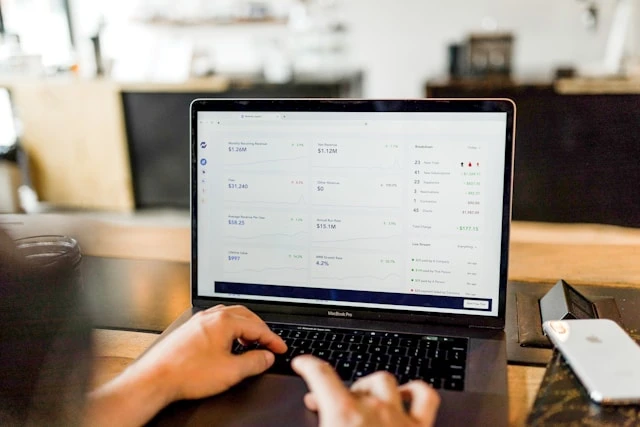
    Access to continuously available financial data transforms accounting from a retrospective function into a strategic one. We design dashboards and analytics layers that present up-to-date insights into cash flow, margins, liabilities, and operational trends. These views are tailored to different stakeholders, enabling leadership to identify risks early, assess performance accurately, and make decisions grounded in reliable financial intelligence.

    General Ledger and Chart of Accounts

    At the basis of every accounting system is a general ledger designed for structure and flexibility. PLANEKS specialists build ledger architectures that accurately match your business model, reporting requirements, and regulatory environment. A well-designed chart of accounts enables clean financial statements, faster close cycles, and consistent reporting across departments, entities, and jurisdictions.

    Accounts Payable and Receivable Automation

    Labor-intensive invoice processing and payment tracking create bottlenecks and increase error rates. Automated accounts payable and receivable workflows improve cash flow predictability, reduce late payments, and minimize reconciliation effort. By embedding approval rules, payment schedules, and validation logic directly into the system, finance teams gain control without operational friction

    Multi-Currency and Multi-Entity Support

    Businesses operating across regions require accounting systems that handle currency conversion, intercompany transactions, and consolidated reporting with precision. We design platforms that seamlessly manage multiple legal entities and currencies, ensuring accurate financial consolidation while maintaining transparency at the local level.

    Tax Calculation and Compliance Reporting

    Tax compliance runs continuously through day-to-day financial operations and cannot be handled as a periodic reporting activity. Our accounting software development company embeds tax calculation logic and compliance workflows directly into financial processes, reducing the need for human-executed adjustments and the reliance on external tools. This improves accuracy, accelerates reporting cycles, and lowers audit exposure while allowing finance teams to adapt quickly to regulatory changes across jurisdictions.

    Role-Based Access and Audit Trails

    Financial systems must maintain accountability and support efficient operations. Role-based access controls ensure that users interact only with data relevant to their responsibilities, reducing internal risk and protecting sensitive information. Comprehensive audit trails record every action and transaction, creating full traceability that supports internal governance, external audits, and long-term regulatory confidence.

    Our Accounting Software Development Services

    Our Services

    Our accounting software development services are designed as long-term infrastructure investments that tangibly support day-to-day performance while enabling sustainable growth. We approach each engagement by syncing financial workflows, compliance requirements, and system architecture with how business operates in practice today and how it needs to scale tomorrow.

    Custom Accounting Software Development

    We design and build made-to-order accounting platforms that reflect internal processes, industry-specific logic, and regulatory obligations. Accounting workflows are modeled around revenue recognition rules, cost structures, reporting formats, and approval chains, so finance teams are not forced into workarounds or rigid software constraints. The result is lower reliance on people-dependent processes, improved data integrity, and long-term system adaptability.
    Custom Software Development Services for Small Business

    Accounting Software Integration

    We connect accounting platforms with ERP, CRM, banking, payment, payroll, ecommerce, tax, and internal systems. Integrations automate the exchange of invoices, payments, customer records, transaction statuses, and reporting data while reducing manual reconciliation and duplicate entry.

    Our engineers support one-way and two-way synchronization, API middleware, historical data migration, validation, monitoring, and audit trails.

    API Integration & Development Services

    Cloud-Based Accounting Solutions

    Our skilled tech engineers develop cloud-native accounting systems that deliver live-updated access, high availability, and built-in scalability. Cloud-based architectures enable secure access for distributed teams, automated backups, and reliable performance during peak transaction periods. PLANEKS custom accounting software development services are established with security and compliance at the infrastructure level, ensuring modern encryption, controlled access, and consistent governance while maintaining usability for finance teams.
    Cloud App Development Services

    Accounting System Modernization

    Legacy accounting software often carries hidden costs in maintenance, security exposure, and operational inflexibility. We modernize existing systems through architectural redesign, structured data migration, and platform upgrades to secure, cloud-ready environments. This way, our clients gain stronger, more reliable performance, lower maintenance overhead, and systems prepared for further scale and compliance demands.
    API Modernization Services

    Accounting Software Integration Services

    Explore how we have built financial platforms, automated accounting workflows, and connected business systems with accounting and reporting tools.

    Accounting Platforms and Business Systems

    We integrate accounting platforms such as QuickBooks, Xero, NetSuite, FreshBooks, and Microsoft Dynamics 365 Business Central with ERP, CRM, banking, ecommerce, Point of Sale, and internal applications. Connections may also include Salesforce, HubSpot, Stripe, PayPal, Adyen, and other platforms supported by the required business workflow.

    Reliable and Audit-Ready Integrations

    We use validation rules, idempotent operations, controlled retries, queue-based processing, and monitoring to prevent duplicate invoices, payments, or journal entries.

    Authentication, least-privilege access, encrypted data transfer, audit logs, and exception workflows help protect sensitive financial data and provide traceability across every synchronization.

    Data Integration Services

    Invoice, Billing and Payment Automation

    We build workflows that create invoices from CRM events, ecommerce orders, subscriptions, or other revenue activities. Invoice statuses and payment updates are synchronized across connected systems so finance, sales, and operations work with the same information. We can also automate payment matching, refunds, reconciliation, approval routing, and exception handling.
    Payment Gateway Integration Services

    Financial Data Synchronization and Migration

    We synchronize customers, vendors, accounts, transactions, tax data, and other financial records using one-way or two-way data flows. Clear ownership rules determine which system controls each data type and how conflicts should be resolved.

    For legacy migrations, we handle field mapping, schema alignment, validation, deduplication, historical imports, and incremental cutovers.

    Data Integration Services

    How we do it

    Our Accounting Software Development Process

    Steps 5

    Reliable accounting software is built through a disciplined process that incorporates business requirements, regulatory accuracy, and long-term system stability. Our approach minimizes risk, maintains transparency into progress, and ensures consistent performance in real-world financial operations.

    1

    Discovery and Requirements Analysis

    We analyze accounting workflows, reporting requirements, existing systems, regulatory constraints, and the quality of available data. For integrations, we identify API limitations, manual steps, synchronization gaps, duplicate records, and the source of truth for each financial entity.
    2

    Solution Architecture and Planning

    We define the accounting data model, integration points, access controls, and synchronization approach. The resulting blueprint documents field mappings, ownership rules, transformations, workflow triggers, and edge cases such as refunds, backdated invoices, currency settlements, and customer merges.
    3

    Development and Integration

    We develop the required accounting functionality, APIs, middleware, and automation workflows through an iterative delivery process. Integrations are tested in sandbox environments before accessing production data, with particular attention to validation, idempotency, retries, rate limits, and system availability.
    4

    Quality Assurance and Compliance Checks

    We validate calculations, accounting logic, data consistency, access controls, and integration failure scenarios. Testing covers duplicate requests, malformed responses, interrupted workflows, reconciliation differences, peak loads, and applicable security or compliance requirements.
    5

    Release and Ongoing Support

    We release the system through a controlled rollout with migration checks, monitoring, alerts, documentation, and rollback planning. After launch, we support API upgrades, platform changes, performance optimization, exception handling, and evolving accounting workflows.

    Security, Compliance, and Data Protection

    Accounting systems process sensitive financial, personal, and transactional data. We incorporate access control, encryption, traceability, and compliance requirements into the architecture of both custom accounting software and its integrations.

    Financial Data Security Best Practices

    We apply proven security practices to protect financial data across its entire lifecycle. With PLANEKS, you hire accounting software developers with robust experience in encryption for data in transit and at rest, controlled access to critical systems, and secure integration with banks, payment providers, and third-party services. Security measures are implemented to minimize exposure while enhancing system usability.

    Compliance with Accounting Standards and Regulations

    Regulatory compliance is handled through both process controls and system-level safeguards. Our accounting platforms are designed to support applicable accounting standards, tax regulations, and reporting obligations across operating jurisdictions, while aligning with recognized control frameworks such as ISO 27001 and SOC 2 principles for security, access control, and auditability. Compliance logic is embedded directly into workflows, reducing reliance on operator-led controls and improving audit readiness as regulatory requirements progress.

    Secure Authentication and Access Control

    Access to financial systems must be tightly governed to protect sensitive data and prevent unauthorized access. We implement secure authentication mechanisms and role-based access controls to limit data visibility and system permissions in line with defined responsibilities. This is done to cut internal risk, support segregation of duties, and strengthen accountability within finance teams.

    Audit-Ready System Architecture

    Transparency and traceability are vital for audits and internal management. Our custom accounting software development services maintain comprehensive logs and immutable audit trails, allowing every transaction and system change to be reviewed, verified, and traced back to their origin, ensuring absolute accountability. We implement logs and audit trails that record financial transactions, system changes, and integration activity. Records can include the source system, timestamp, affected entity, synchronization result, and responsible process, supporting internal reviews and external audits.

    Tell us more about your project

    Contact us to discuss your accounting integration needs

    Why Choose Us for Accounting Software Development

    Our Benefits

    The choice of an accounting software development partner influences financial accuracy, compliance, and operational resilience over time. Our approach comprises in-depth, domain-specific background, accountability, and practical insight into how financial systems function in real-ecosystem operations.

    Experience With Financial Systems and Integrations

    We build accounting and financial products that combine reporting, automation, transactional data, and third-party systems. Our engineers understand how accounting structures, integration workflows, and system failures can affect financial accuracy, reconciliation, and auditability.

    Business-Oriented Development Approach

    Our development process begins with business logic and operational realities. Through a cohesive partnership with stakeholders, we capture financial processes, decision requirements, and growth objectives early, then represent them directly in the system design. Therefore, your software directly supports operational goals and integrates naturally into daily workflows.

    Deep Understanding of Accounting Workflows

    Accounting workflows require precision, consistency, and traceability. We comprehend the interactions among general ledgers, reconciliations, approvals, and reporting cycles, as well as design systems that minimize systemic inefficiencies and support reliable financial outcomes.

    Scalable Solutions Built for Long-Term Use
    PLANEKS builds accounting systems engineered to scale with transaction volume, organizational complexity, and evolving regulatory demands. Clean architectures and well-structured data models reduce technical debt, accelerate change, and ensure the system continues to deliver value as the business grows.

    Frequently Asked Questions

    FAQ

    PLANEKS has addressed the most common questions we receive from business leaders considering custom accounting software development. Our clarifications are intended to help you comprehend the scope, timelines, and considerations engaged, so you can make smarter decisions with confidence.

    What is custom accounting software development?

    Custom accounting software development comprises designing and building financial systems tailored to a company’s specific workflows, reporting requirements, and regulatory environment. In contrast to out-of-the-box, custom platforms align directly with how a business operates, enabling greater accuracy, automation, and long-term scalability while reducing manual work and operational risk.

    How long does it take to build accounting software?

    Timelines depend on system complexity, number of integrations, data migration scope, and regulatory requirements:
    • Basic accounting platform: up to 6 months
    • Mid-tier system with integrations: 6-12 months
    • Enterprise-grade solution: 12+ months
    • Highly regulated or specialized systems: 24+ months
    We can provide an initial consultation to assess the scope, clarify requirements, and outline a realistic timeline before development begins. A standalone accounting integration may take less time than full product development, but its timeline depends on the number of connected systems, API limitations, workflow complexity, data quality, and historical migration requirements.

    Can you integrate with existing accounting tools?

    Yes. We integrate custom and existing accounting systems with ERP, CRM, payroll, banking, payment, ecommerce, tax, and internal platforms. Depending on the workflow, we implement real-time APIs, scheduled synchronization, event-driven processing, middleware, or a combination of these approaches.

    How do you ensure data security and compliance?

    Security and compliance are essentially incorporated into the system architecture from the very outset. We implement role-based access controls, encryption, audit trails, and compliance-aware workflows to protect sensitive financial data and support regulatory requirements.

    How much does accounting software development cost?

    The cost varies widely based on scope, features, integrations, compliance requirements, and team location. To give you better guidance, here are some rough calculations. Simple, basic systems with fundamental accounting functions often start at around $30,000-$50,000. Mid-range solutions with automation, reporting, and integrations typically fall in the $50,000-$150,000 range. Fully custom, enterprise-grade systems that handle complex workflows, multi-entity reporting, advanced automation, and deep integrations can run $200,000-$400,000 or more.

    Which accounting platforms can you integrate?

    We work with accounting and ERP platforms such as QuickBooks, Xero, NetSuite, FreshBooks, and Microsoft Dynamics 365 Business Central, as well as custom financial systems. The available functionality depends on the platform’s API, permissions, data model, and usage limits.

    How do you prevent duplicate invoices or payments?

    We use idempotent operations, unique transaction identifiers, validation rules, reconciliation checks, and controlled retry logic. Repeated requests or webhooks can therefore be processed without creating duplicate invoices, payments, or journal entries.

    Can you migrate historical accounting data?

    Yes. We can migrate customers, vendors, accounts, invoices, payments, journal entries, and other historical records. The process may include field mapping, schema transformation, validation, deduplication, reconciliation, incremental imports, and rollback planning.

    Slide project team businessman with a tablet graph on the iphone display glass on the table

    Testimonials

    What do people praise about PLANEKS?

    Contact us to receive a transparent estimate grounded in clear requirements and aligned with investment, risk, and long-term business value.

      Let's help you!

      It's out pleasure to have a chance to cooperate.

      hospitality api
      django api development