













We design and build dashboards for teams that rely on data for daily decisions and reporting. Across analytics platforms and internal operational tools, we focus on speed, consistency, and reliability as data volumes grow, user bases expand, and business logic evolves, becoming more complex. Our approach starts with data architecture, because most dashboard problems originate in the data layer, not the frontend.
What Kind of Dashboards We Build
Our Solutions
Our core tech stack includes Django and FastAPI backends, PostgreSQL, Redis, and Celery. We build systems where architectural decisions made at the outset have a straightforward long-term impact on performance, scalability, and operational stability.
Advantages of Custom Dashboards
Where Custom Dashboards Deliver the Most Value
Off-the-shelf BI tools handle standard reporting. Everything else, custom aggregation, multi-source unification, product-embedded analytics. requires a different approach.
SaaS analytics platforms embedded into products
Cross-source reporting systems with unified metrics
Internal tools with business-specific logic
What we offer
Our Services
Each service below addresses a specific layer of dashboard infrastructure. Our clients range from early-stage startups to enterprise teams. We scope engagements based on what your system actually needs.
Our approach
How We Approach Dashboard Systems from Day One
Real-time queries against transactional tables that work in development and collapse under load – this is one of the most common issues we encounter in dashboard projects. Discover how we prevent it and address other critical performance problems from the start.
Designing data flows before UI components
Separating ingestion, processing, and serving layers
Building with real data from early stages
Scaling process
How Dashboard Systems Evolve as Data and Usage Grow
Our established approach is to build dashboard systems from the ground up, with scalability baked in from day one. Besides, when PLANEKS steps in to take over an existing solution, our experts apply the same principles: rework the architecture so it performs just as reliably as it grows under increasing data and user load.
From direct queries to structured data pipelines
Growing data volume shifting bottlenecks to storage and aggregation
Evolving business logic making metrics harder to trust
What we offer
How We Handle Data Complexity
Most data systems fail not because of scale, but because sources don’t align, pipelines break silently, and metrics mean different things across teams. We design systems where these issues are solved at the foundation level.
How we do it
Engineering Decisions That Define Dashboard Performance
We believe that dashboard performance is determined in the data layer and the aggregation strategy, which are decisions most teams defer until the product breaks.
Reduced database load
A GROUP BY across 100M rows on every page load is unnecessary. We precompute aggregates via Celery into summary tables. Freshness lags by 5–60 minutes, which is acceptable for most business dashboards, and reduces database load by 80% compared with live-query architectures.
Faster query time
Redis sits between the API and database for read-heavy endpoints. The real challenge is invalidation: expiry timing, partial updates, and pipeline runs that affect only part of a cached response. Our dashboard development company designs cache keys and TTLs to match data freshness requirements.
Daily events handled by our pipelines
True real-time is expensive and rarely necessary. Aggregates refreshed every 30-300 seconds cover most operational cases. Celery beat handles scheduled runs; event-triggered tasks handle priority updates.
SaaS dashboard scaled from 1000 to 40K without architectural changes
A 3NF write-optimized schema requires multiple joins for basic analytical queries. We maintain separate denormalized structures – materialized views or Celery-driven summary tables – so the read path stays fast regardless of underlying complexity.
Our advantages
How Our Approach Differs
Most dashboard vendors start with the visualization layer and work from the outside in. They focus on UI, while the architecture that makes it reliable and elastic often gets treated as secondary. We make it our primary priority and a starting point.
How we do it
How We Build Dashboard Systems
Within our dashboard development services, implementation follows the same structure as the architecture: data layer first, serving layer second, frontend last.
Review Your Dashboard Architecture
Case studies
Real-World Examples Across System Types
Our real-time dashboard app development services span SaaS analytics, eCommerce reporting, internal operations, and legacy system replacement, each requiring different data architecture requirements.
SaaS analytics dashboard
Ecommerce reporting system
Internal operations dashboard
Legacy reporting replacement
Proof
Measurable Impact
The outcomes we track are concrete and measurable. Pre-aggregated tables brought query latency from 2.5 seconds to under 100ms. Caching and aggregation strategies cut database load by 80%. A SaaS dashboard scaled from 1000 to 40K users without architectural changes. Pipelines processing 3M+ records per day run stably and are monitored. Forty manual Excel reports were replaced by a single automated system. In all of these cases, the work started with architecture before any frontend component was built.

When you should opt for pre-built dashboards
Who This Is Not For
Most performance issues aren’t infrastructure problems. There are problems with how the system actually works. We go deep into system behavior and requirements before reaching for scaling solutions.
Small Data
Simple Data
Challenges
Addressing Common Concerns
Most dashboard vendors and agencies start with the visualization layer and work from the outside in. The focus goes on UI, while the architecture that makes it reliable and elastic often gets treated as secondary. We make it our primary priority and a starting point.
Testimonials
What do people praise about PLANEKS?
Slow dashboards and inconsistent numbers cost you decisions, trust, and engineering time. Our agency for custom dashboard development offers a focused review of your data pipeline and query architecture, covering aggregation strategy, caching design, and metric consistency. The output is a concrete assessment of what’s bottlenecking the system and what would resolve it. Schedule a call with our dashboard development team, and we’ll map out an approach that fits your goals, taking your idea from initial concept to a production-ready solution.

Andras Marozsi
Finding competent automation engineers who produce a high quality code was very challenging, most other candidates just automatically started to add timeouts when they faced an issue. Candidates who PLANEKS offered had a much more mature approach, started with understanding the challenge and then provide a proper solution. I am happy to refer PLANEKS to any friend who needs reliable contractors.

Gabriel Yarra
Results were exactly what I wanted. PLANEKS was very flexible and able to quickly accommodate many requests. The fulfilled all phases of the project, and the result was a working application. Clear communication with no miscommunications or confusion. Professionals. Easy to work with!

Antoine Falisse
I am happy with PLANEKS’ services. The team’s project management is great, and their resources always meet deadlines. Communication is great too. I feel they’re a part of my team and really care about the project. Overall, the partnership has been truly successful.

Anonymous (Financial App)
What we found most impressive about PLANEKS was their exceptional ability to seamlessly integrate complex financial and technical components, delivering a user-friendly solution that met our needs effectively. Their dedication to both project management and customer service set them apart, ensuring that every aspect of our collaboration, from development to issue resolution, was handled with the utmost professionalism and responsiveness. This combination of technical prowess and exceptional service made them a unique and outstanding partner.

Marissa Huggins
PLANEKS did deliver projects on time and we are extremely happy with our services to-date. Not only has Anton been extremely kind in helping us navigate many time zones and work cultures, the engineers assigned have always been extremely professional and complete their work relatively as requested and on time. This is the most thorough and considerate engineering team we have ever outsourced by far. While there are still some gaps around communication and expectations for deliverables,this has been our best experience with offshore work yet.

Turi Mercuri
PLANEKS was ahead of schedule and built far more advanced than expected! What did I find most impressive or unique about this company? Professionalism, efficiency, clear communication and willingness to think outside the box to complete the tasks within fewer hours and at a higher standard than expected!! I will be working with PLANEKS for any future software development.

James Plowright
They meet their customer promises and communicate well. Anton is a great project manager and communicator, as a non-tech product owner I’ve found that he’s played an integral role in filling in the gaps to ensure there’s product design and technology alignment. We are due to launch soon and excited to start collecting feedback!

Daniel Smith
The projects have been completed on time and within budget. PLANEKS made sure that everything goes smoothly. Communication is excellent. They are happy to integrate with our existing tools and processes to communicate on projects. Furthermore, PLANEKS are open and honest about their capacity and capabilities.

Chloe Dagenais-Mignault
Our app needs quite specific knowledge and there is a big learning-curve, to which they have adapted quickly. Every deliverable has been finished in time and with great quality. All expectations were met and beyond. We really like PLANEKS’s teamwork and ability to understand complex business problems, business logic and how to efficiently address those problems in our code.
5.0/5.0
Blogs & news
Interesting articles regularly updated
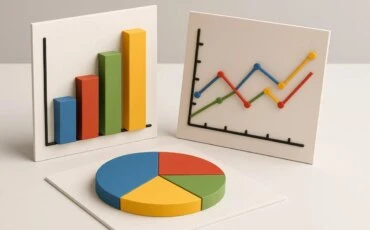
What Is Data Visualization? Tools & Examples
The basics of data visualization, covering essential principles, tool selection, practical implementation strategies, accessibility standards, and leadership insights for creating visuals that …

Python vs Power BI for Dashboard Development
Compare Python vs Power BI, diving into their strengths and limitations to help you determine which is the better choice for your …