









Data Integration Services

planek
planek
planek
planek
planek
planek
planek
planek
planek
planek
planek
planek
planek
planek
planek
planek

    SMART SOLUTION
    Award-winning data integration services for a reasonable price
    data usage

    Connect APIs, databases, SaaS tools, internal platforms, and cloud systems into clean, reliable data flows. PLANEKS builds custom data integration solutions for startups and SMEs that need dependable analytics, automation, and reporting.

    You get automated data flows, cleaner reporting, fewer manual tasks, and a foundation ready for analytics and business automation.

    We also apply AI to optimize development, and our senior engineers review every change to keep the code resilient and production-ready.

    Our Data Integration Services

    Across 150+ completed projects, clients bring us the same integration challenges and questions: rate limits, retries, schema changes, and records that stop syncing. Our data integration engineering services cover the full path from source system to usable dataset.

    Data Integration Consulting and Architecture

    Our data integration consulting services begin by analyzing how your data currently gets from source to destination. This includes an audit of existing systems, source-and-destination mapping, integration architecture, and data-flow documentation. We also recommend tools and infrastructure that match your data volume so the design fits your specific workload.

    API Data Integration Services

    Most SaaS data transfers occur over APIs, so when a pipeline fails under load, the API layer is usually where it happens. Our engineers build resilient third-party and internal API integrations with error handling, retry logic, rate limiting, and monitoring, preventing temporary API failures from causing data loss or inconsistencies. We integrate CRM, ERP, payment, logistics, marketplace, and marketing platforms, as well as custom internal systems.

    ETL and ELT Pipeline Development

    Pipelines become hard to maintain when all the transformation logic is in a single undocumented script. Our teams extract data from databases, APIs, CSV, XLSX, PDF files, and cloud services, then clean, transform, and validate it before loading into warehouses, dashboards, or operational systems. For large historical loads, our Big data integration services use batch and scheduled pipelines with incremental updates, so only changed records are reprocessed.

    Real-Time Data Integration

    Real-time sync raises complexity, so we suggest it only when a delayed record causes the actual business problem. Our engineers build event-driven sync with webhooks, queues, and background workers using Celery and Redis. This supports synchronous dashboards, operational alerts, and transactional system synchronization. If batch processing is sufficient, we advise it.

    Cloud Data Integration

    As a cloud data integration company, PLANEKS connects systems across Amazon Web Services, Google Cloud, and Microsoft Azure without dependence on a single provider. This covers cloud-to-cloud integration, on-premises-to-cloud data flows, cloud databases and warehouses, and secure data transfer that scales with data volume.

    Database and Data Warehouse Integration

    Reporting slows down when data is stored in tables designed for transactions. For example, an eCommerce company may have orders, customers, and inventory data spread across operational databases that are optimized for daily operations, but not analytics. We integrate PostgreSQL and MySQL sources, create reporting-ready tables, and build data structures that allow dashboards to load quickly without affecting the production system. Our team handles schema design, indexing, and query optimization to keep reporting performance stable even as data volumes grow.

    Data Quality, Validation, and Deduplication

    Incorrect data does the most damage because teams rely on it to run operations. As part of our data integration service, our engineers remove duplicates, standardize formats, handle missing values, apply validation rules, run reconciliation checks, and log failed records with alerts, so a broken sync is caught early instead of after the numbers are wrong.

    Systems and Data Sources We Integrate

    Across 100+ clients, we’ve integrated most of the systems businesses adopt, such as SaaS tools, ERPs, and legacy databases.

    Business Systems

    CRM, ERP, accounting platforms, HR and operations tools, inventory, and order management systems.

    SaaS and Cloud Platforms

    Shopify, Amazon, eBay, Twilio, OpenAI, cloud storage, cloud databases, and business platforms such as HubSpot, Salesforce, QuickBooks, and SAP.

    Technical Sources

    REST and GraphQL APIs, SQL and NoSQL databases, CSV, XML, and JSON files, webhooks, and legacy systems.

    Destinations

    Data warehouses, internal admin panels, BI dashboards, SaaS products, automation workflows, and machine learning or AI-ready datasets.

    How Our Data Integration Process Works

    We have a well-established process that remains consistent across projects, while the architectural decisions within it are tailored to each business.

    1

    Data Source and Business Workflow Audit

    Each of our projects starts by mapping your systems: the source of each dataset, its destination, and the sync frequency it requires.
    2

    Integration Architecture Planning

    Next, our engineers define the approach: API sync, ETL or ELT pipeline, batch processing, real-time events, or a hybrid architecture.
    3

    Data Mapping and Transformation Logic

    With sources defined, the team maps fields between systems, sets transformation rules, normalizes formats, and documents the logic to ensure maintainability.
    4

    Development and Integration Implementation

    The data integration service covers APIs, connectors, pipelines, background jobs, and cloud infrastructure built in Python. AI accelerates this step, and senior developers review the output.
    5

    Testing, Validation, & Data Quality

    Testing focuses on edge cases: duplicates, missing fields, failed records, permissions, and cross-system consistency.
    6

    Deployment, Monitoring, and Support

    After deployment, we offer data integration as a service: monitoring sync health, handling errors, and supporting future system changes as your systems evolve.

    Data Integration Patterns We Use

    We choose the pattern per project, based on latency, data volume, and how systems interact. Each pattern below fits a specific class of problem.

    01

    API-Based Integration

    Suited to SaaS platforms, CRMs, ERPs, payment systems, and marketplaces, where each system exposes a stable API and data moves on request.
    02

    ETL/ELT Integration

    The right choice for analytics, reporting, warehouses, and historical data consolidation, where data is transformed and loaded in defined stages.
    03

    Real-Time Data Synchronization

    Applied to operational systems, dashboards, transactions, and alerts that depend on current data and cannot tolerate a delay.
    04

    Batch Data Integration

    Handles large datasets that do not require live updates, processing records on a schedule to keep the load predictable.
    05

    Event-Driven Integration

    Fits cases where an action in one platform should trigger an update in another, so systems react to events as they happen.
    06

    Legacy System Integration

    Connects older internal software with modern cloud platforms, often through a translation layer that isolates the legacy system from new services.

    Data Integration for Analytics, Automation, and AI Readiness

    Every dashboard and automation runs on data pulled from other systems, and the quality of that integration determines whether teams can trust the output. Clean, connected data supports reliable dashboards, automated reporting, flow automation, customer 360 views, AI-ready datasets, and more accurate forecasting. For example, teams across finance, marketing, sales, and product work from a single, consistent source of truth instead of each maintaining their own version in a spreadsheet.

    Proud projects make us excel

    Industries

    We’ve delivered data integration services across 20+ domains, and since each has its own data and industry-specific peculiarities, we tailor the work to your sector’s specific requirements.

    CRM and Accounting

    Connect product data, billing, CRM, support, analytics, and internal admin systems, so revenue and customer records stay consistent across tools.
    Accounting Data Integration Services

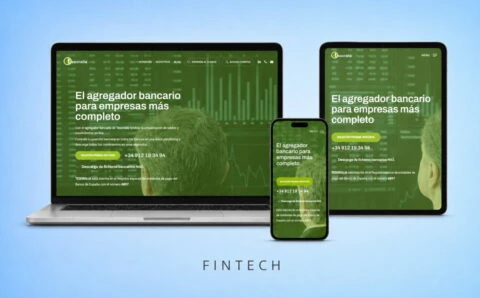
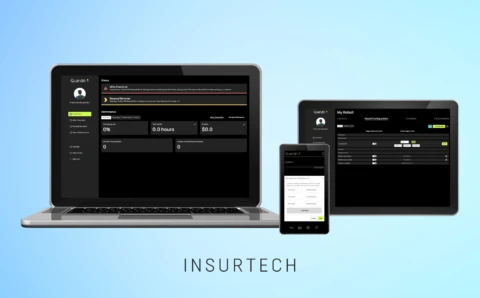
    Fintech and InsurTech

    Connect customer data, transactions, risk data, policy systems, financial APIs, and reporting tools under strict accuracy and audit requirements.
    Insurance Data Integration Services

    Logistics

    Integrate fleet, route, order, warehouse, tracking, and reporting systems, where data changes constantly, and delays affect operations.
    Shipping API Integration Services

    Real Estate

    Sync property listings, CRM data, geolocation tools, dashboards, and marketplace platforms across sources that update on different schedules.
    Real Estate API Integration Services

    Healthcare

    Build secure integrations for patient data, internal workflows, reporting, and healthcare platforms, with access control and compliance applied throughout.
    Healthcare API Integration Services

    eCommerce

    Sync orders, products, inventory, customer data, payments, shipping, marketing tools, and analytics, so stock and fulfillment stay accurate at volume.
    eCommerce API Integration Services

    Why Choose PLANEKS as Your Data Integration Company

    10+ years of backend engineering mean your integration is handled by a team that has built the APIs, queues, and background jobs it runs on.

    Strong API and backend development background

    Integration depends on stable APIs, queues, background jobs, authentication, and permissions. This is core backend work that our engineers perform regularly.

    Business-oriented delivery

    In our data integration engineering services, we focus on the outcome: fewer manual processes, cleaner data, reliable reporting, and systems that remain in sync.

    Python-first engineering expertise

    We build custom backend systems, APIs, data processing logic, and automation workflows with Python technologies including Django, FastAPI, Celery, and PostgreSQL.

    Security and compliance by design

    Our team implements encryption, access controls, logging, audit trails, and workflows aligned with regulations such as GDPR, HIPAA, and other industry-specific compliance requirements, ensuring sensitive records are protected in transit and at rest.

    How Much Do Data Integration Services Cost?

    The cost of data integration engineering services is mostly determined by complexity, which gives you room to scope the budget to your case. A quote reflects the number of systems, API complexity, data volume, transformation logic, security requirements, and whether the work is batch, near-instant, or cloud-native. In our practice, most projects fall into one of four categories: a simple API or SaaS integration, a multi-system business integration, a data warehouse or analytics integration, or a complex real-time or enterprise build.

    For a detailed breakdown, reach out to our data integration consultants for an accurate price based on your systems and requirements.

    FAQ About Data Integration Services

    Common questions about our data integration services, from methods and supported systems to timelines and data quality.

    What are data integration services?

    Data integration services connect data from different systems, databases, APIs, cloud tools, and business applications into consistent, usable data flows. The goal is a single, reliable data source that analytics, reporting, and automation can run on without manual exports.

    What is the difference between data integration and ETL?

    ETL is one method of data integration. Data integration is the broader process of connecting, syncing, transforming, and making data usable across systems. ETL suits analytics and warehouse loads, while other methods, such as API sync or event-driven integration, fit up-to-the-second and operational use cases.

    What systems can PLANEKS integrate?

    CRMs, ERPs, SaaS platforms, payment systems, eCommerce platforms, databases, analytics tools, cloud platforms, internal software, and third-party APIs. If a system exposes an API, a database connection, or a file export, we can connect it.

    Do you provide real-time data integration?

    Yes. PLANEKS can build real-time or near-immediate integrations using APIs, webhooks, queues, event-driven architecture, and background processing. We recommend always-current only when a delayed record causes a business problem, since batch is simpler and cheaper to run when timing allows.

    Can you integrate legacy systems with modern cloud platforms?

    Yes. PLANEKS is a cloud data integration company that connects legacy databases, internal tools, and older systems to modern SaaS products, cloud infrastructure, and dashboards, often via a translation layer that keeps the legacy systems isolated from new services.

    Can you build dashboards after integrating the data?

    Yes. PLANEKS can prepare analytics-ready datasets and build dashboards or reporting tools on top of integrated data, including reporting-ready tables designed for fast queries.

    How long does a data integration project take?

    A single API or SaaS integration usually takes 2 to 4 weeks. A multi-system build runs 2 to 4 months depending on data volume, business logic, security, and testing. Most engagements start with a 1- to 2-week audit before implementation begins. Contact our data integration consulting firm, and we'll map realistic milestones for your specific case.

    How do you ensure data quality?

    Through field mapping, validation rules, deduplication, transformation logic, error handling, reconciliation checks, testing, and monitoring. Failed records are logged and flagged, so a broken sync is caught early instead of surfacing in a report.

    What do people praise about PLANEKS?

      Let's help you!

      It's out pleasure to have a chance to cooperate.

      hospitality api
      django api development