









PLANEKS delivers AI-augmented development services designed to improve delivery speed, code quality, and long-term maintainability by combining engineering expertise with targeted AI automation. We bridge the gap between what AI tools are marketed to do and what they actually deliver in real development teams.
In practice, AI is effective for pattern-based work such as boilerplate generation, test scaffolding, and refactoring, but is limited when contextual judgment is required, such as with ambiguous requirements, legacy complexity, and architecture decisions tied to product history. In our model, AI handles repetitive implementation, while engineers own the reasoning layer. This enables faster delivery, higher consistency, and lower long-term cost.
Benefits
Advantages of AI-augmented Development
Most project delays come from process friction, such as context switching, ramp-up time, and repetitive overhead. AI-augmented development services, when applied at the right layers, reduce bottlenecks without changing the engineering fundamentals.
Faster iteration cycles in backend-heavy systems
More efficient use of developer time
Consistent code quality across teams
Scalable output without proportional team growth
How we do it
How We Integrate AI Into Real Development Workflows
At PLANEKS, we integrate AI tools directly into the engineering workflow at the layers where they produce consistent, controlled, beneficial, and secure outcomes.
AI-assisted coding pipelines
AI-driven test generation and validation
All of this is integrated into our CI/CD pipeline. AI performs as a core instrument in the workflow, adopted at every stage where it ensures optimization and enhanced efficiency.
How we do it
From Vibe-Coded Prototype to Production Software
Vibe coding and AI development tools can help founders and product teams turn an idea into a working prototype quickly. The challenges usually appear when the application needs to handle real users, sensitive data, payments, third-party integrations, complex permissions, or continued feature development. PLANEKS reviews AI-generated applications, identifies fragile implementation and architectural risks, and prepares promising prototypes for controlled production use.
Architecture decisions
Where AI Fits in the Stack
Our team applies AI-driven intelligence to your workflows with deliberate architectural placement, ensuring it supports the system while improving performance and development speed.
AI at the development layer vs the product layer
When to use LLM APIs vs fine-tuned models
Handling latency, cost, and reliability in AI-assisted systems
Case Study: AI-Assisted Refactoring of a Legacy Python System

EuropaFoodXB
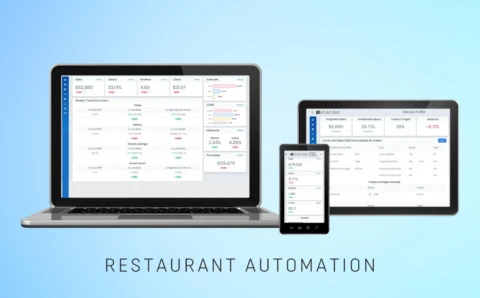
The main goal was the creation of the online store and also the development of a CRM system for staff to make their daily tasks easier and faster. …
Refactoring existing systems is often harder than building new ones because there is no clean slate, only accumulated technical decisions, workarounds, and debt that must be explored before proceeding with any changes. One of the longest-running projects of our AI-augmented software development company is EuropaFoodXB, a UK-based European food retailer with over 7,000 products, an active eCommerce store, and a custom CRM system for order management. The platform was built on Django and Django Oscar, which are solid foundations. However, over time, it accumulated complexity, making changes slower and riskier than required.
The problem primarily lied in the interconnected nature of the system: a parallel migration from an old database to a new one with entirely different schemas, a custom multi-region delivery engine coordinating four courier services with overlapping rules, integrations with DPD for automated tracking number generation, and daily operational workflows such as order reporting and abandoned cart recovery, all developed iteratively without a unified architectural structure.
To address this, our team applied AI-assisted code analysis and refactoring to systematically review the codebase, surface refactoring opportunities, and generate restructured implementations for senior engineer review. Every AI-generated change was manually validated before reaching production, ensuring correctness while accelerating iteration. This approach reduced technical debt and improved maintainability across the system. As a result, AI augmented feature development became significantly faster, improving development speed by 35-50%, while simultaneously reducing early-stage bugs and improving onboarding time for new developers. The system became more stable, easier to maintain, and faster to evolve for the client’s team.
Advantages
Use Cases Where AI Augmentation Delivers Measurable ROI
AI augmentation provides clear ROI in areas where development work is structured, repeatable, and engineering-heavy.

API development and integration-heavy platforms


Identify the highest-impact opportunities to accelerate development and reduce costs.
Case studies
Proud projects make us excel
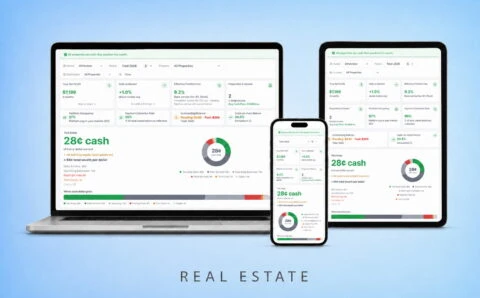
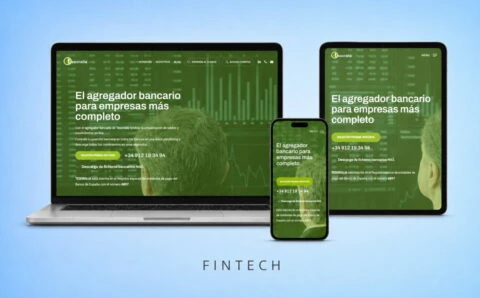

Already have a plan? Or are you just getting your head around it?
Our approach
Engineering-First, Not Tool-First
We focus on where AI can meaningfully support delivery without compromising system understanding, code quality, or long-term maintainability.
3 Principles
Testimonials
What do people praise about PLANEKS?

Andras Marozsi
Finding competent automation engineers who produce a high quality code was very challenging, most other candidates just automatically started to add timeouts when they faced an issue. Candidates who PLANEKS offered had a much more mature approach, started with understanding the challenge and then provide a proper solution. I am happy to refer PLANEKS to any friend who needs reliable contractors.

Gabriel Yarra
Results were exactly what I wanted. PLANEKS was very flexible and able to quickly accommodate many requests. The fulfilled all phases of the project, and the result was a working application. Clear communication with no miscommunications or confusion. Professionals. Easy to work with!

Antoine Falisse
I am happy with PLANEKS’ services. The team’s project management is great, and their resources always meet deadlines. Communication is great too. I feel they’re a part of my team and really care about the project. Overall, the partnership has been truly successful.

Anonymous (Financial App)
What we found most impressive about PLANEKS was their exceptional ability to seamlessly integrate complex financial and technical components, delivering a user-friendly solution that met our needs effectively. Their dedication to both project management and customer service set them apart, ensuring that every aspect of our collaboration, from development to issue resolution, was handled with the utmost professionalism and responsiveness. This combination of technical prowess and exceptional service made them a unique and outstanding partner.

Marissa Huggins
PLANEKS did deliver projects on time and we are extremely happy with our services to-date. Not only has Anton been extremely kind in helping us navigate many time zones and work cultures, the engineers assigned have always been extremely professional and complete their work relatively as requested and on time. This is the most thorough and considerate engineering team we have ever outsourced by far. While there are still some gaps around communication and expectations for deliverables,this has been our best experience with offshore work yet.

Turi Mercuri
PLANEKS was ahead of schedule and built far more advanced than expected! What did I find most impressive or unique about this company? Professionalism, efficiency, clear communication and willingness to think outside the box to complete the tasks within fewer hours and at a higher standard than expected!! I will be working with PLANEKS for any future software development.

James Plowright
They meet their customer promises and communicate well. Anton is a great project manager and communicator, as a non-tech product owner I’ve found that he’s played an integral role in filling in the gaps to ensure there’s product design and technology alignment. We are due to launch soon and excited to start collecting feedback!

Daniel Smith
The projects have been completed on time and within budget. PLANEKS made sure that everything goes smoothly. Communication is excellent. They are happy to integrate with our existing tools and processes to communicate on projects. Furthermore, PLANEKS are open and honest about their capacity and capabilities.

Chloe Dagenais-Mignault
Our app needs quite specific knowledge and there is a big learning-curve, to which they have adapted quickly. Every deliverable has been finished in time and with great quality. All expectations were met and beyond. We really like PLANEKS’s teamwork and ability to understand complex business problems, business logic and how to efficiently address those problems in our code.
Cooperation
Engagement Models for AI-Augmented Development
We are flexible in our engagement models and adapt our approach to each specific case. Our core cooperation models for AI-augmented software engineering are as follows.
FAQ
Can you improve an application built through vibe coding?
Do you need to rebuild a vibe-coded application from scratch?
5.0/5.0
Blogs & news
Interesting articles regularly updated

Top 10 Python Developers in Ukraine
Explore the best Python development companies in Ukraine, highlighting their expertise, services, projects worth your attention, and what makes each partner stand …
Python vs JavaScript for Web Development
The practical differences of Python vs JavaScript for web development so you can make the right call for your project. …