












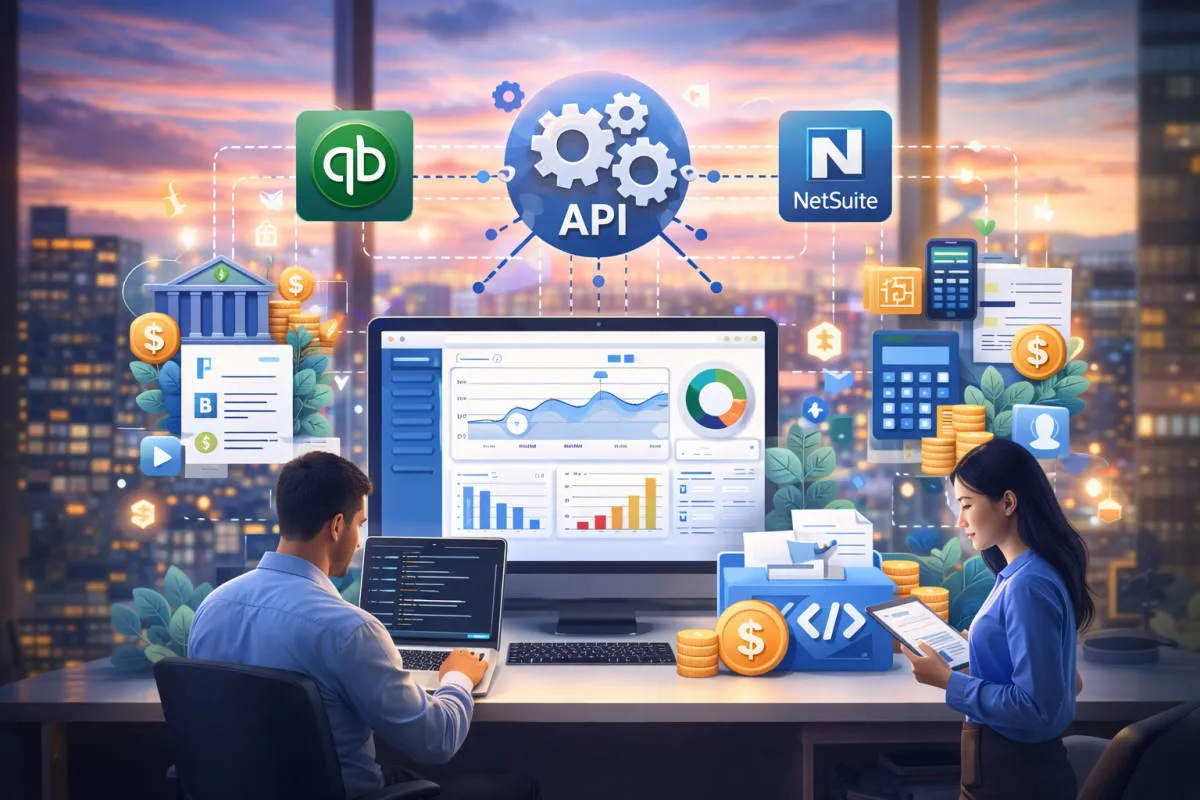
PLANEKS introduces accounting API integrations to assist companies that have exceeded manual processes and disconnected financial tools. Our experienced team implements reliable, secure connections between accounting platforms, ERPs, banks, and internal systems, ensuring financial data moves accurately and consistently across your stack.
Recurring problems in manual accounting workflows cover delays, reconciliation errors, and reporting blind spots. In case your transaction volume keeps increasing, spreadsheets, exports, and manual checks may stop being efficient safeguards and start getting in the way. Accounting software integration stops the problem at its source, eliminating data silos across your financial systems. At PLANEKS, we ensure automated two-way synchronization with validation, monitoring, and audit trails, supporting finance teams with reliable execution and full financial visibility.
What we integrate
Our Solutions
We design custom accounting software integration around the systems that genuinely come in handy for finance teams, aligning data with the operational tools that generate it.
Accounting & ERP systems
Business apps we connect to accounting
Examples
Common Use Cases
Get acquainted with the most frequent accounting software integration scenarios we implement for expanding companies with non-trivial operational complexity. Such cases are informed by the practical challenges of scaling accounting systems alongside growing business operations. They mostly involve B2B businesses, where accounting systems must support long sales cycles, contract-based revenue, and strict audit requirements.
Invoice and billing synchronization
Payment reconciliation automation
Customer and vendor data syncing
Multi-currency, tax, and region-specific workflows
Integrate your accounting platform with banks, payments, and ERP systems to eliminate manual entry and keep financial data accurate
Real-time reporting and analytics pipelines
For many clients, accounting data must be available outside the accounting system. Through our tailored integrations, financial data is validated, structured, and delivered into reporting pipelines and dashboards, providing fast-updating insights into key performance indicators (KPIs), such as cash flow, AR/AP aging, and revenue trends without manual exports or delayed reports.
What we do
Our Accounting API Integration Services
Our accounting system integration incorporates the full lifecycle, from early technical decisions to long-term operational stability. Each engagement is executed to accurately fit existing finance flows while minimizing manual intervention and systemic risk.
Accounting Integration Process
How the Accounting Integration Process Works
We run accounting integration projects as a structured, technical delivery process with clear checkpoints, giving stakeholders full transparency and visibility into progress and risk throughout delivery.
6 Steps
Discovery and system audit
Integration blueprint
Development and sandbox testing
Security review and compliance checks
Deployment and monitoring setup
Training and documentation
The basic timeframes of API integration for accounting software are determined by the complexity of workflows and the number of systems involved. Concise, straightforward integrations usually can be handled in 2-4 weeks, while more complex workflows typically require 6-12+ weeks, especially when multi-entity accounting, historical migration, or region-specific tax logic is engaged.
Features
Key Features of a Reliable Accounting Integration
For finance and technical leaders, the quality of an accounting integration shows up in accuracy, auditability, and operational resilience. We outline the features that make an integration dependable in real business conditions.
Secure authentication and access control
Controlled sync direction and data ownership
Conflict resolution rules
Idempotency and duplicate prevention
Full audit logs and traceability
Field mapping and data validation
Rate-limit aware processing and queueing
APIs impose limits, and integrations must respect them. Our tech experts employ queue-based processing that adapts to rate limits, batches requests intelligently, and puts emphasis on critical operations. Resilience is maintained during peak loads, preventing service disruptions caused by throttling.
Our benefits
Why Choose Us for Accounting API Integration
An accounting integration partner must be chosen based on trust, experience, and technical engineering discipline across financial workflows. Finance systems tolerate very little ambiguity, and integrations must be built with a deep background of how accounting data behaves in a practical operational environment.
Deep experience with accounting data structures
Clean, maintainable integration architecture
Built for scale and operational resilience
Clear documentation for finance and technical teams
What you can count on
Security & Compliance
The accounting integration API handles highly sensitive financial and transactional data. Security and compliance controls are built directly into the integration architecture from the start, rather than added as compensating layers later.
Case studies
Proud projects make us excel
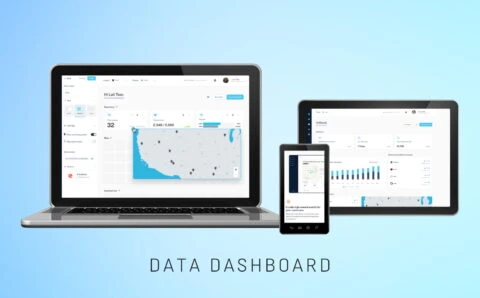
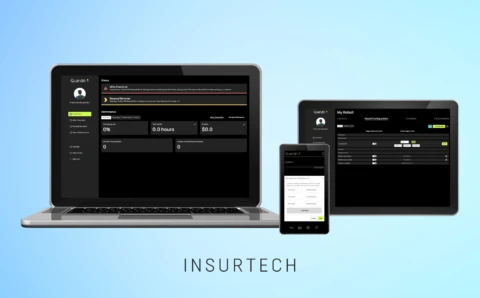
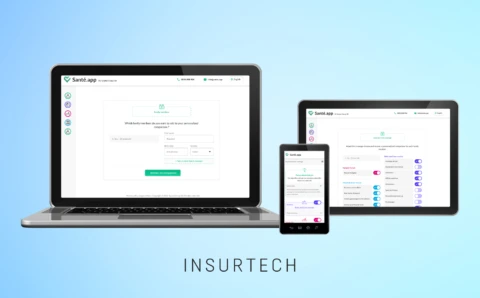
The accounting integration API handles highly sensitive financial and transactional data. Security and compliance controls are built directly into the integration architecture from the start, rather than added as compensating layers later.


Testimonials
What do people praise about PLANEKS?
Get started with accounting API integration from dedicated tech professionals. Request a technical consultation with PLANEKS to assess your specific data flows, risks, and integration architecture for your finance systems.

Andras Marozsi
Finding competent automation engineers who produce a high quality code was very challenging, most other candidates just automatically started to add timeouts when they faced an issue. Candidates who PLANEKS offered had a much more mature approach, started with understanding the challenge and then provide a proper solution. I am happy to refer PLANEKS to any friend who needs reliable contractors.

Gabriel Yarra
Results were exactly what I wanted. PLANEKS was very flexible and able to quickly accommodate many requests. The fulfilled all phases of the project, and the result was a working application. Clear communication with no miscommunications or confusion. Professionals. Easy to work with!

Antoine Falisse
I am happy with PLANEKS’ services. The team’s project management is great, and their resources always meet deadlines. Communication is great too. I feel they’re a part of my team and really care about the project. Overall, the partnership has been truly successful.

Anonymous (Financial App)
What we found most impressive about PLANEKS was their exceptional ability to seamlessly integrate complex financial and technical components, delivering a user-friendly solution that met our needs effectively. Their dedication to both project management and customer service set them apart, ensuring that every aspect of our collaboration, from development to issue resolution, was handled with the utmost professionalism and responsiveness. This combination of technical prowess and exceptional service made them a unique and outstanding partner.

Marissa Huggins
PLANEKS did deliver projects on time and we are extremely happy with our services to-date. Not only has Anton been extremely kind in helping us navigate many time zones and work cultures, the engineers assigned have always been extremely professional and complete their work relatively as requested and on time. This is the most thorough and considerate engineering team we have ever outsourced by far. While there are still some gaps around communication and expectations for deliverables,this has been our best experience with offshore work yet.

Turi Mercuri
PLANEKS was ahead of schedule and built far more advanced than expected! What did I find most impressive or unique about this company? Professionalism, efficiency, clear communication and willingness to think outside the box to complete the tasks within fewer hours and at a higher standard than expected!! I will be working with PLANEKS for any future software development.

James Plowright
They meet their customer promises and communicate well. Anton is a great project manager and communicator, as a non-tech product owner I’ve found that he’s played an integral role in filling in the gaps to ensure there’s product design and technology alignment. We are due to launch soon and excited to start collecting feedback!

Daniel Smith
The projects have been completed on time and within budget. PLANEKS made sure that everything goes smoothly. Communication is excellent. They are happy to integrate with our existing tools and processes to communicate on projects. Furthermore, PLANEKS are open and honest about their capacity and capabilities.

Chloe Dagenais-Mignault
Our app needs quite specific knowledge and there is a big learning-curve, to which they have adapted quickly. Every deliverable has been finished in time and with great quality. All expectations were met and beyond. We really like PLANEKS’s teamwork and ability to understand complex business problems, business logic and how to efficiently address those problems in our code.
5.0/5.0
Blogs & news
Interesting articles regularly updated

Best 7 Hospitality API for Restaurants
The top seven hospitality APIs restaurants should adopt, how to choose the right one, and what to watch out for when you …

Django API Development: the Complete Guide
Evaluating Django for an upcoming project, want to define what their engineering team is building with, or need to assess whether Django …