





Python Development Services Agency

planek
planek
planek
planek
planek
planek
planek
planek
planek
planek
planek
planek
planek
planek
planek
planek

    SMART SOLUTION
    We Build Python Projects that Evolve
    development with python

    A system that performs well in its first month and breaks under its own weight a year later isn’t an unusual outcome. Our team had to join such projects midway very often to know exactly where they break and how to rebuild them to last. Our Python software development agency designs for the next stage of growth: clean domain boundaries, deliberate framework choices, and data layers structured for changes.

    We create backend systems, APIs, and data architectures for companies that plan to scale in resilience, maintainability, and seamless performance. Working with both early-stage products and platforms handling millions of requests, we focus on architecture, performance, and long-term system behavior.

    Our offering

    Our Services

    Companies that hire experts in Python development services expect engineering depth. They often get mere feature delivery instead: teams that implement code without questioning if the architecture can sustain growth. At PLANEKS, every feature we design is part of a larger system built to last reliably and effectively.

    Custom Python Software Development

    We build production solutions with Django and FastAPI, choosing the tech stack based on the project's specific requirements. A common mistake many tech teams make is starting with a lightweight framework for speed, then spending months adding authentication, migrations, and admin tooling that Django includes out of the box. We adopt Django for products that require authentication, admin interfaces, relational data models, and a predictable development pace. FastAPI is our choice when the system is API-first or latency-sensitive.

    API Development and Integrations

    We focus on avoiding the bottlenecks commonly seen in API systems: slow response times, inconsistent data formats, and a lack of versioning. Our team designs APIs with Django REST Framework or FastAPI, depending on the system context, implements proper authentication flows (OAuth2, JWT, API keys), and builds integration layers that handle retries, rate limits, and graceful degradation. We treat your API as an essential part of your tech ecosystem, not as a byproduct of your backend.

    Data Systems and Pipelines

    We architect data layers with PostgreSQL as the backbone, Celery for distributed task processing, and Redis for caching and message brokering. Our focus is on getting the data model right from the start: proper indexing, query optimization, materialized views for reporting, and ETL pipelines that process millions of records without choking your production database. We have reduced batch processing from 45 minutes to under 6 minutes by restructuring Celery worker distribution and optimizing PostgreSQL query plans.

    Automation Systems

    Many teams underestimate background job complexity. They start with a simple Celery task, add more, then wonder why jobs fail silently and why the Redis queue consumes all available memory. We design queue architectures with proper task routing, dead-letter handling, idempotency guarantees, and monitoring. Our Python development agency configures Redis as a message broker with the right persistence settings, visibility timeouts, and priority queues, so tasks aren't lost on restart and slow jobs don't block critical ones.

    Legacy Modernization

    We regularly encounter codebases implemented quickly and never refactored: monolithic Django apps with 200-line view functions, no test coverage, and raw SQL scattered everywhere. Our approach is incremental: instead of rewriting from scratch, we identify the highest-risk components, introduce boundaries, add tests, and refactor module by module, while the product keeps running.

    High-Load Backend Systems

    When your system needs thousands of concurrent connections, sub-200ms response times, or millions of database operations daily, standard approaches stop working. We apply connection pooling with PgBouncer, implement read replicas, design multi-level caching strategies, and profile every critical path. Our Python developers and engineers turn scaling from a crisis into a routine operation.

    System Scaling and Performance Engineering

    At PLANEKS, performance engineering is where every project begins. We profile bottlenecks, optimize database queries, tune infrastructure, and design caching strategies that reduce server load without introducing stale data. As a Python development services company, we deliver systems that handle growth without rewriting.

    Architecture Design and System Refactoring

    A common problem our clients struggle with is that their existing system was configured, lacking a transparent architectural plan. Modules are tightly coupled, data flows are tangled, and adding any new feature requires changes in several unrelated components. We restructure and strengthen these systems through deliberate refactoring: introducing domain boundaries, defining service interfaces, and migrating toward a modular structure that your team can extend seamlessly.

    Systems We Build

    Our Solutions

    We categorize every project by its system type. A multi-tenant platform, a data pipeline, and a high-load API each demand their own engineering approach, while the industry behind them is important, but often secondary. The best Python software development services are established around how systems actually perform.

    SaaS Platforms

    Multi-tenant architectures with Django are our crucial engineering expertise. We handle tenant isolation at the database level (shared schema with row-level security or schema-per-tenant, depending on scale), build permission systems that work across organizational hierarchies, and design billing integrations that do not become a maintenance setback. Our SaaS clients typically start with 50-100 users and grow to thousands without a rewrite.
    SaaS Development Services

    Internal Tools

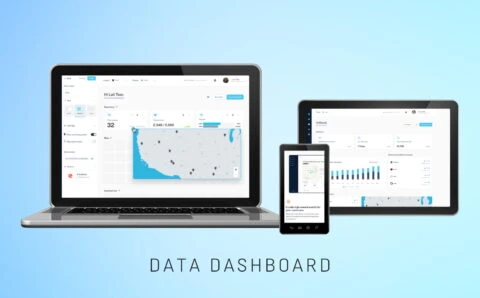
    From our experience, analytics dashboards, workflow engines, approval systems, and reporting tools are products internal teams depend on daily but rarely get sufficient engineering attention. We implement them using Django’s admin framework as a base and extend it with custom views, role-based access controls, and real-time data updates. The outcome is a tool that comes in handy for your operations team, streamlining daily workflows, reducing manual steps, and giving them real-time data for faster decisions.
    CRM Development Services

    Data Platforms

    ETL pipelines, event-driven architectures, and analytics backends require a different approach than typical web development. PLANEKS designs data platforms that ingest data from multiple sources, transform it reliably, and serve it via fast query interfaces. PostgreSQL with proper partitioning and indexing can replace a dedicated data warehouse in most cases, saving both cost and architectural complexity.
    Dashboard Development Services

    High-Load APIs

    We have built APIs that handle over 500,000 requests per day using FastAPI, Redis caching, and PostgreSQL connection pooling. Aside from the framework choice, the key is how you design the data schema, structure serialization, manage database connections, and handle caching invalidation. Our Python engineers apply these patterns to make them the foundation of the system.
    API Development Services

    Scaling process

    How Python Systems Scale

    The approach of our Python development agency diverges from the industry. We follow a data-first scaling principle validated across many of our successful projects.

    1

    Django Monolith With Asynchronous Execution

    Every system starts here: a well-structured Django monolith with Celery and Redis for background tasks and integrations - handling authentication, business logic, API endpoints, and admin interfaces in one deployable unit. Too many teams rush to microservices at this stage. A monolith with proper internal boundaries is faster to develop, easier to debug, and simpler to deploy.
    2

    Modular (Shared) Monolith

    As the system grows, we enforce clear domain separation within a single codebase. Each module has its own models, services, and API layer, communicating through defined interfaces rather than importing each other’s internals. This gives you the organizational benefits of microservices without the operational overhead, scalable across multiple servers behind a load balancer.
    3

    Data Optimization and Scaling

    Before splitting services, we optimize the data layer. PostgreSQL tuning (work_mem, shared_buffers, effective_cache_size), query plan analysis with EXPLAIN ANALYZE, strategic indexing, materialized views, and read replicas. In our experience, 80% of scaling problems are database issues. Fixing them here prevents premature architectural complexity.
    4

    Isolate Critical Components as Services

    We only extract a service once it becomes a clear bottleneck, moving high-load or independent domains into microservices. We typically recommend extracting notification systems, file processing pipelines, search indexing, or payment processing first. Each extracted service gets its own database, deployment pipeline, and monitoring, using message queues (Redis or RabbitMQ) for inter-service communication.
    5

    Cloud-Native Scaling

    For systems that truly need it, we deploy separate services to cloud infrastructure with container orchestration and auto-scaling. But we only reach this stage when the system demands it. At PLANEKS, our team has grown projects from 10,000 to 200,000 users without cloud-native splitting, because the earlier stages were done properly.

    Challenges

    Architecture Decisions

    Architectural choices made without clear criteria tend to create bottlenecks, scaling limits, or maintenance debt that compounds over time. Our job is to make those choices right from the outset, so they support performance, scale, and long-term maintainability in the long run.

    Django vs. FastAPI

    Django is our default when the project needs ORM, admin, auth, migrations, and form validation. FastAPI is reasonable when implementing an API service that requires async performance. We've seen teams spending months rebuilding Django's migration system in FastAPI because they picked a "fast" framework without considering the full lifecycle.

    Monolith vs. Services

    From our practice, a monolith is the right starting point for almost every system. A modular monolith with clear boundaries is easier to test, deploy, and monitor than a distributed system. Microservices add latency, transaction complexity, and operational overhead. We recommend extraction only when a component has genuinely different scaling requirements.

    Sync vs. Async

    Switching to async helps only when your bottleneck is I/O wait time. If your bottleneck is CPU-bound computation or complex ORM queries, async adds complexity without improving performance. We have seen deployments where switching from async to sync reduced response time from 400ms to 120ms because the event loop was blocked by synchronous database operations.

    Start With an Architecture Conversation

    How PLANEKS works

    Python Development Process

    Our process is designed to deliver solutions that grow in reliability, maintainability, and performance. With a qualified Python development agency, you should expect end-to-end system thinking from design through scaling preparation.

    5 Steps

    01

    System Design

    Before writing code, we map the future product: data models, API contracts, integration points, and failure modes. We identify where the system will be under stress and design around those constraints. This is an architectural blueprint.

    02

    Architecture Validation

    We validate the architecture against realistic scenarios. Can it handle 3x your expected load? What if the payment API goes down? We equip you with a clear picture of how your system will behave under practical conditions.

    03

    Python Development

    We ship in two-week cycles that include code review, automated testing, and deployment to staging. Our Python software developers never accumulate untested code, ensuring each deployment is resilient in production.

    04

    Performance Testing

    Before launch, we load-test under realistic conditions. We have validated systems under 3x expected load and identified bottlenecks that would have caused outages on day one. This is an essential part of every project.

    05

    Scaling Preparation

    We keep the next growth milestone in mind. Database schemas account for 10x data growth. API architectures support versioning and backward compatibility. Background jobs are configured for increased throughput.

    How we do it

    How We Handle Complexity

    Our clients come to us with problems that cannot be solved by adding servers or switching frameworks. With PLANEKS, you get real complexity managed efficiently.

    PostgreSQL Optimization

    We treat PostgreSQL as an engineering discipline. Query plan analysis, index strategy (B-tree, GIN, GiST), connection pooling, vacuum tuning, and partitioning for tables beyond millions of rows. We have reduced dashboard query times from 12 seconds to 0.9 seconds through pre-aggregation and materialized views.

    Redis Caching

    Redis is not just a cache; we configure it as a session store, rate limiter, message broker, and real-time data server - each with appropriate persistence and eviction policies. A common mistake is using one Redis instance for everything. That works until your Celery broker fills up and evicts session data.

    Celery Queue Design

    Distributed task processing requires careful design: task routing, retry policies with exponential backoff, idempotency guarantees, resource limits, and monitoring for failures and queue depth. We redesign ETL pipelines, reducing job processing time from 45 minutes to 6 minutes by restructuring task granularity and worker allocation.

    Our Experience

    Real System Scenarios

    We measure our work by system-level outcomes. Our best Python software development services are demonstrated through tangible engineering results.

    13 X

    Faster Load Times

    A client’s reporting dashboard was taking 12 seconds to load, running full table scans on a 40-million-row PostgreSQL table. PLANEKS implemented pre-aggregation pipelines, added composite indexes, and introduced a Redis caching layer for frequently accessed reports. Load times dropped to 0.9 seconds with zero infrastructure changes.

    8 X

    Faster Processing Times

    Nightly batch jobs were taking 45 minutes and frequently timing out because Celery tasks processed records sequentially with individual database writes. We restructured the pipeline to use bulk operations, parallel execution with chunking, and PostgreSQL COPY instead of INSERT. Processing time dropped to 6 minutes on the same hardware.

    3 X

    Faster Response Times

    A mobile API was averaging 400ms response times at 200,000 daily requests, bottlenecked by serialization overhead and N+1 query patterns in Django REST Framework. Our team migrated critical endpoints to FastAPI, added Redis response caching with intelligent invalidation, and implemented connection pooling. The result: 120ms average at the same request volume.

    Our Python Technology Stack

    Engineering Stack and Tools

    Django logo

    Django

    Django is our default for full-product development. ORM, admin, auth, migrations, and a massive ecosystem. Our go-to when the project demands a full framework with ORM, admin, auth, and migrations.
    Django Development Services
    flask icon simple

    Flask

    Flask aims to keep the core simple but extensible. It won’t make many decisions for you, it is up to you. Flask can be everything you need and nothing you don’t.
    Flask Development Services
    fastapi logo png

    FastAPI

    High-performance API services require a framework built for speed. FastAPI gives us async support, automatic OpenAPI documentation, and Pydantic validation for high concurrency.
    FastAPI Development Services
    drf icon django rest framework

    Django REST framework

    Flexible and fully-featured library with modular and customizable architecture that aims at building sophisticated web APIs and uses Python and Django.
    Hire DRF Developers
    redis logo

    Redis

    Caching, session management, message brokering, and real-time data structures - Redis covers all of it. Each workload gets a separate instance with its own configuration to prevent resource contention.
    postgre database logo png

    PostgreSQL

    From small applications to systems with hundreds of millions of rows, PostgreSQL is our primary database. With proper tuning, it handles far more than most teams expect.
    Celery logo

    Celery

    Distributed task processing needs proper routing, retry logic, and monitoring. Celery backed by Redis or RabbitMQ delivers exactly that, depending on reliability requirements.
    Docker logo small png transparent

    Docker

    Every project runs in Docker from the start. Containerized environments keep dev, staging, and production identical, so deployments work exactly as expected.

    Who This Is Not For

    We are transparent about fit for all of our clients. If you need a quick landing page, a short-term freelancer, or a team that builds exactly what you specify without questioning the architecture, we are not the right partner. PLANEKS is also not the best vendor for quick fixes, short-term projects, or teams that do not want engineering opinions. We work with companies that value technical depth and systems designed to grow, delivering high performance in the long term.

    Case studies

    Proud projects make us excel
    SaaS

    Our team reduced API latency by 70% through a caching layer redesign and serialization optimization. Our multi-tenant platforms serve tens of thousands of users with sub-200ms response times.

    eCommerce

    We increased request throughput by 4x through connection pooling and async processing, without incurring proportional infrastructure costs. Our backend systems handle peak traffic on the checkout and catalog APIs without degrading performance.

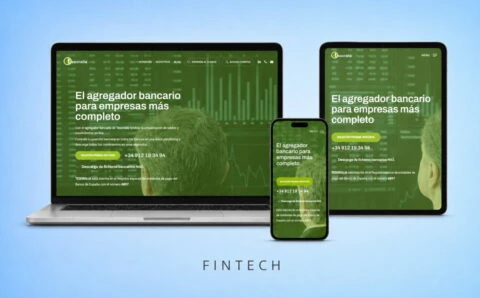
    Fintech

    As part of our cooperation, we reduced PostgreSQL CPU load by 60% through query rewrites, an indexing strategy, and a read replica architecture. Our experts built real-time transaction processing backends with the reliability fintech demands.

    Our Advantages

    How We Differ From Typical Python Vendors

    #1most wanted language

    among all companies of Fortune 500

    The Python outsourcing market is crowded with agencies that sell developers by the hour – a model that optimizes for billing, but not outcomes. Most vendors you’ll find optimize for delivery speed, deliver code, and finish the partnership. When you hire a Python development agency like PLANEKS, you get engineers who design systems with a deep understanding of your business flows, peculiarities, and concept. We optimize for system lifespan: code your team can maintain, extend, and scale without us. Typical providers scale teams, whereas we expand systems and think about what happens to your software products months later, not just what ships this sprint.

    How much does Python development cost?

    The Python development cost depends on different factors that include, but are not limited to; project complexity, features, and the necessity to integrate third-party services or API. You can calculate how much you will have to spend on Python development by multiplying the time required for development and the Python programmer's hourly rate. At the same time, an hourly rate can vary depending on developers’ professional level and their location.

    How long does it take to develop a web app with Python?

    The time needed for development depends on the overall project complexity. The more features and integration you need, the longer the development process will last. For example, creating a backend for a custom eCommerce website, which has a few thousand products, can take from 4 to 12 weeks.

    Why should I choose an offshore Python development company?

    PLANEKS is an offshore Python software development services company that focuses on startups and has vast experience in various industries with more than 150 successfully developed projects. We offer reasonable pricing and have the client’s needs as our primary focus. With PLANEKS, you can be sure exactly what you want and even more.

    Testimonials

    What do people praise about PLANEKS?

    Every project we take on starts with a conversation about your system’s architecture, constraints, and growth goals. If need custom Python software development, API design, or a dedicated team to own your backend, we’re ready to start. Share your project details – schedule a technical call with our representatives today.

      Let's help you!

      It's out pleasure to have a chance to cooperate.

      python companies in Ukraine
      python vs javascript