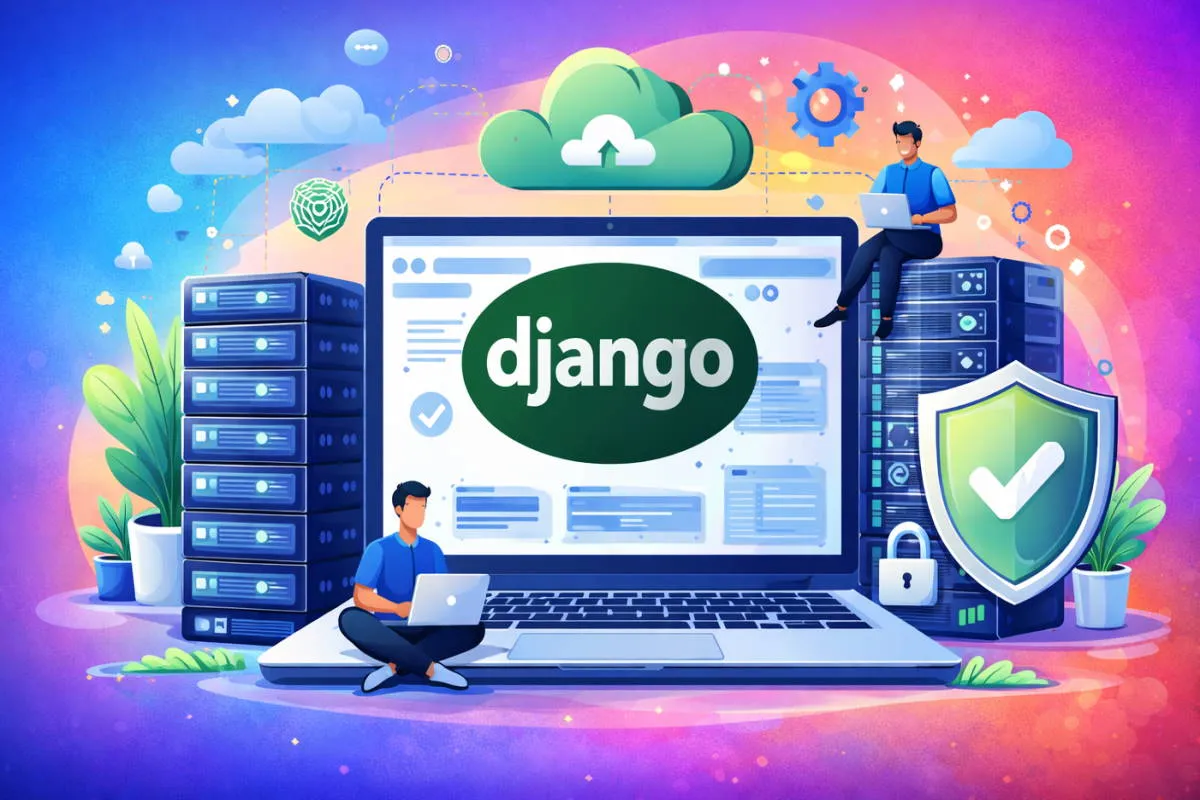
Selecting the right Django hosting environment is a decisive factor in achieving exceptional application speed, uptime, and scalability. Django’s robust framework continues to dominate both startup ecosystems and enterprise-grade development due to its rapid prototyping capabilities, built-in security features, and clean architectural design. Yet, despite its widespread adoption, not every hosting provider that “supports Python” is optimized for Django’s specific requirements. Many platforms fail to deliver the seamless database integration, asynchronous support, and deployment automation that Django applications demand. This gap often leads to performance bottlenecks and scaling limitations that could otherwise be avoided with a dedicated, Django-optimized host.
In this article, we take a research-driven approach to identify the best Django hosting services available today, ensuring your Django app achieves exceptional performance and scalability. Each provider was evaluated for compatibility, speed, reliability, and ease of deployment, ensuring developers and decision-makers alike can choose hosting that enables their Django projects to perform at full potential.
Table of Contents:
Why Django Requires Specialized Hosting
Choosing a hosting environment for a Django app is not as simple as selecting any provider that lists Python among its supported languages. Django is a high-level, full-stack framework designed for complex, data-driven applications, which means it requires an infrastructure capable of handling its advanced features and deployment workflows. Understanding these technical requirements helps avoid compatibility issues and performance degradation down the line. Among the best Django apps examples are platforms like Spotify for Artists and Disqus, proving Django’s adaptability and robustness.
Django’s Technical Requirements
At its core, Django is built on Python and follows a Model–View–Template (MVT) architecture powered by an Object-Relational Mapper (ORM). This design allows developers to interact with databases such as PostgreSQL or MySQL via Python objects rather than raw SQL, significantly speeding up development. A proper hosting environment must therefore include a stable Python 3.x runtime and support for WSGI or ASGI servers, such as Gunicorn, uWSGI, or Daphne, to manage application requests efficiently.
Equally important are developer tools like SSH access, pip or virtualenv for dependency management, and Git for version control. Django applications also require reliable handling of static and media files through services like Nginx, Amazon S3, or built-in CDN integrations, to ensure smooth content delivery and scalability. Beyond web apps, Django also powers dynamic CMS platforms and enterprise content systems that rely on flexible templates and database-driven architecture.
Why Generic Hosting Often Fails
Traditional PHP-oriented shared hosting plans rarely meet Django’s deployment standards. They typically lack command-line access, limit environment customization, and often run outdated Python versions incompatible with modern Django releases. Without root access or proper server control, developers face broken dependencies, unstable environments, and frequent downtime, making generic hosting unsuitable for professional Django applications.
How We Chose the Top 10 Django Hosting Providers
Our selection process focused on measurable, experience-backed criteria that reflect real-world deployment needs, since Django is used for a wide variety of modern web applications. Each provider was evaluated for technical compatibility, including support for Python and Django versions, as well as WSGI/ASGI readiness, alongside performance benchmarks such as uptime consistency, speed, and scalability. We also assessed ease of deployment through Git integration, Docker or Kubernetes availability, and CI/CD options. Transparent pricing, robust security measures, automated backups, and responsive custoºmer support were equally critical.
This list combines first-hand experience from real Django projects with verified user and community reviews, aligned with official Django documentation to ensure transparency, expertise, and trustworthiness.
Top 10 Django Hosting Services for 2025
Choosing the best hosting for Django means going beyond server specs – it’s about finding a platform that balances performance, automation, and developer control. Modern Django applications demand environments that support continuous integration, containerization, and global scalability, while also maintaining cost transparency and security compliance. The following ten providers stand out for their Django-friendly hosting environments that combine speed, reliability, and developer convenience. Each description combines technical and business perspectives to help you make a confident, informed decision. In case you still necessitate tech-savvy guidance, a professional Django development company can help you choose, configure, and optimize hosting for maximum uptime and performance.
DigitalOcean
DigitalOcean remains one of the most trusted names in developer-centric hosting. Its VPS instances, known as Droplets, allow you to configure and deploy Django environments in minutes with complete administrative control. Built around simplicity and predictability, DigitalOcean offers native integrations with Gunicorn, Nginx, PostgreSQL, and Redis, essential tools for production-ready Django setups. The platform’s robust documentation and active community further streamline deployment and troubleshooting. DigitalOcean suits small to mid-sized Django applications and agile teams that prefer hands-on management. While it requires some sysadmin experience to configure, the control and transparency it provides make it the cost-effective option, with plans starting at $5 per month.
Heroku
Heroku pioneered the “push-to-deploy” model, being one of the best hosting for Python Django, delivering a fully managed experience. Developers can deploy directly from Git, automate scaling, and integrate add-ons like Redis or Sentry with minimal configuration. The platform abstracts infrastructure complexity, letting you focus purely on code and business logic. It’s particularly valuable for prototypes, MVPs, and early-stage startups where speed to market is critical. Although its convenience comes at a higher cost as projects scale, Heroku delivers unmatched ease of use and reliable uptime. Pricing begins with a free tier for testing and extends to production-grade plans from $7 per month.
PythonAnywhere
PythonAnywhere is designed exclusively for Python and Django, providing a ready-to-use environment that eliminates the need for manual configuration. Its browser-based console, built-in WSGI support, and automatic static file management make it an excellent choice for smaller applications, learning projects, or SaaS prototypes. The trade-off is limited scalability and fewer customization options, which makes it less suitable for enterprise workloads. However, for developers seeking a lightweight, maintenance-free platform, it delivers exceptional ease of use. Pricing starts with a free plan for basic apps, followed by paid tiers at $5 per month.
Render
Render combines the simplicity of Heroku with the flexibility of modern infrastructure. Deployments are triggered directly from Git, and each update runs through an automated build pipeline with zero downtime. Docker support, integrated HTTPS, and automatic scaling make Render a reliable platform for production Django environments. It is ideal for teams seeking an affordable, hands-off solution that strikes a balance between simplicity and performance. While it offers less granular control than VPS-based providers, its clear pricing model and seamless automation make it appealing for businesses aiming to reduce DevOps overhead. Plans begin at $7 per month.
A2 Hosting
A2 Hosting offers the familiarity of traditional cPanel management while providing modern support for Python 3 and Django. It’s a strong choice for developers who want a shared hosting interface but need the flexibility to manage dependencies, run migrations, and access the command line via SSH. Its SSD-powered servers ensure solid performance, though shared plans may face occasional resource contention under heavy traffic. This hosting works best for small businesses or individual developers transitioning from standard web hosting to Django-based projects. Prices start at $6.99 per month.
Google Cloud Platform (GCP)
Google Cloud delivers one of the most advanced hosting infrastructures for Django applications, offering deployment flexibility through App Engine, Compute Engine, or Kubernetes Engine. Its globally distributed data centers, load balancing, and integrated monitoring make it ideal for data-driven or AI-enabled Django projects. GCP’s pay-as-you-go structure allows businesses to scale dynamically, although its interface can feel complex for beginners. For enterprise applications that depend on analytics, machine learning, or large datasets, GCP offers unparalleled scalability and reliability. New users can take advantage of free credits, with ongoing costs determined by actual usage.
Amazon Web Services (AWS)
AWS continues to dominate the hosting market with its comprehensive suite of services for Django deployment. Developers can choose EC2 for full control, Elastic Beanstalk for managed orchestration, or Lightsail for simplified VPS hosting. Its global infrastructure ensures high availability and low latency across regions. The platform’s extensive ecosystem (including RDS for databases, S3 for media storage, and CloudWatch for monitoring) makes it the most versatile solution for mission-critical applications. AWS is best suited for large enterprises or high-traffic Django platforms that require security, redundancy, and performance at scale. While pricing varies by service, Lightsail plans start at roughly $5 per month.
Microsoft Azure
Azure offers an enterprise-grade environment for Django hosting, particularly for organizations leveraging Microsoft’s ecosystem. Django can be deployed via Azure App Service with integrated PostgreSQL databases, CI/CD pipelines, and built-in scalability. The platform emphasizes compliance, security, and automation, making it an optimal choice for corporate applications that require governance and integration with tools like Microsoft 365 or Active Directory. It’s a robust but complex environment, better suited to professional teams than hobbyists. Azure’s pay-as-you-go pricing model and free testing tier make it accessible for experimentation before full deployment.
Vultr
Vultr delivers high-performance cloud VPS hosting at a competitive price, giving developers complete freedom to configure their Django stack. With SSD-based storage, a global network of data centers, and hourly billing, it provides an excellent cost-to-performance ratio. The platform appeals to experienced developers who prefer to manage deployment pipelines, security updates, and server configurations directly. While it lacks managed hosting features, its raw speed and transparency make it an outstanding option for developers and agencies running multiple client projects. Typical pricing starts at $5 per month.
Hetzner
Hetzner, a leading European cloud provider, offers exceptional value through powerful VPS instances and dedicated servers optimized for high performance. Its infrastructure is ideal for developers seeking full administrative control, low latency across Europe, and reliable hardware without the premium pricing of larger clouds. Hetzner’s intuitive management console and consistent uptime make it a strong choice for technically proficient users comfortable with system administration. While it lacks global coverage compared to AWS or GCP, its cost efficiency and transparency make it one of the most cost-effective Django hosting providers available. Many global companies that use Django, including Instagram and Pinterest, rely on scalable hosting infrastructures similar to those featured here.
With so many capable hosting providers available, comparing their key attributes side by side helps clarify which one best suits your Django project. The table below summarizes the essential differences between the top ten options, including their hosting type, ease of setup, ideal use cases, starting price, and standout features. Whether you prioritize hands-on server control, one-click deployment, or enterprise scalability, this overview offers a clear snapshot of how each platform performs in real-world development scenarios.
| Provider | Type | Ease of Setup | Ideal For | Starting Price | Best Feature |
| DigitalOcean | VPS | ⭐⭐⭐⭐ | Small–medium Django apps, agile teams | ~$5/mo | Full developer control and transparent pricing |
| Heroku | PaaS | ⭐⭐⭐⭐⭐ | MVPs, prototypes, startups | ~$7/mo | One-click Git-based deployment and automatic scaling |
| PythonAnywhere | PaaS | ⭐⭐⭐⭐ | Personal or educational projects | ~$5/mo | Preconfigured Django environment for quick setup |
| Render | PaaS | ⭐⭐⭐⭐ | Production Django applications | ~$7/mo | Automated CI/CD with zero-downtime deployments |
| A2 Hosting | Shared/VPS | ⭐⭐⭐ | Small business websites, beginner developers | ~$6.99/mo | cPanel interface with Python 3 and SSH support |
| Google Cloud (GCP) | Cloud | ⭐⭐⭐ | Data-intensive and AI-driven apps | Pay-as-you-go | Scalable infrastructure within Google’s ecosystem |
| Amazon Web Services (AWS) | Cloud | ⭐⭐⭐ | Enterprise-grade Django systems | Pay-as-you-go | Unmatched scalability and global reliability |
| Microsoft Azure | Cloud | ⭐⭐⭐ | Corporate and enterprise environments | Pay-as-you-go | Deep integration with Microsoft tools and services |
| Vultr | VPS | ⭐⭐⭐⭐ | Developers and small agencies | ~$5/mo | High-speed SSD VPS with global data centers |
| Hetzner | VPS | ⭐⭐⭐⭐ | Budget-conscious developers, European teams | ~€4/mo | Exceptional price-to-performance ratio |
How to Choose the Right Hosting for Your Django Project
Selecting the ideal Django web hosting starts with assessing your project’s complexity, your team’s technical expertise, and your long-term budget. For beginners or small-scale applications, platforms like PythonAnywhere, Render, or Heroku offer simplicity, quick deployment, and minimal configuration. Mid-size projects that require more control and scalability without full enterprise overhead are best served by DigitalOcean, A2 Hosting, or Vultr. Meanwhile, enterprise-grade Django systems demanding advanced security, auto-scaling, and global availability thrive on AWS, Azure, or Google Cloud Platform.
A simple decision path helps guide your choice: need automated scaling and enterprise resilience? Choose AWS or GCP. Prefer effortless deployment with transparent pricing? Go with Render. Want total control at minimal cost? DigitalOcean or Hetzner delivers precisely that. If you need help with deployment or scaling, partnering with one of the best Django development agencies can streamline your hosting setup.
Best Practices for Hosting Django Applications
Hosting a Django application extends far beyond simply choosing a server. It should complement the built-in security features of Django, such as CSRF protection and authentication middleware. True performance and reliability depend on how the environment is configured, secured, and maintained. Following established best practices ensures that your application remains scalable, efficient, and safe from common production pitfalls.
Secure Your Configuration
Security starts at the configuration level. Always set DEBUG=False in production to prevent sensitive data exposure and ensure that your SECRET_KEY remains private and never hardcoded. Use environment variables or secret managers (such as AWS Secrets Manager or Azure Key Vault) to handle credentials securely. Enforce HTTPS with SSL/TLS certificates, apply HTTP security headers, and restrict allowed hosts to known domains.
Manage Static and Media Files
Serving static and user-uploaded media directly from your application server can quickly become inefficient. Use a dedicated storage solution like Amazon S3, Google Cloud Storage, or DigitalOcean Spaces, paired with a global CDN for faster delivery. This offloads bandwidth and improves latency, particularly for media-heavy applications.
Optimize Database and Caching
Performance optimization begins with efficient database usage. Django’s ORM works best with optimized databases like PostgreSQL or MySQL, supported by indexes, query caching, and replication. For further acceleration, integrate in-memory caching tools such as Redis or Memcached, which drastically reduce response times and database load.
Automate and Monitor
Consistency and observability are critical in production. Implement Git-based workflows and CI/CD pipelines (GitHub Actions, GitLab CI, Jenkins) to automate testing, deployment, and rollback. Monitor uptime and resource usage using tools like New Relic, Datadog, or Prometheus. Schedule automatic backups for both databases and static content to ensure recoverability in case of outages or data loss.
Maintain and Update
Outdated dependencies are one of the leading causes of security vulnerabilities. Keep Django, Python, and all third-party packages regularly updated through tools like pip-audit or Dependabot. Perform periodic load testing, review system logs for anomalies, and document all environment changes. Regular maintenance not only improves stability but also ensures compliance and long-term scalability for growing applications. Thanks to its modular design, reusable components, and strong community, Django is good for web development that demands scalability and security from day one.
Common Mistakes to Avoid
Even the most well-built Django applications can underperform or become vulnerable if deployed incorrectly. Many issues stem not from the framework itself, but from overlooked configuration and infrastructure decisions. Avoiding these common mistakes can prevent costly downtime, data exposure, and scalability problems as your project grows.
Deploying with DEBUG=True in Production
Leaving DEBUG=True enabled in a production environment is one of the most dangerous misconfigurations. It exposes detailed error messages and system information that attackers can exploit. Always disable debug mode and properly configure ALLOWED_HOSTS to include only trusted domains.
Using Incompatible Shared Hosting
Generic shared hosting often lacks root access, SSH, or control over the Python environment. Without these capabilities, you can’t install dependencies, run migrations, or manage virtual environments efficiently. Django requires a dedicated or virtualized environment with WSGI/ASGI server support to run reliably.
Ignoring Static and Media Configuration
Failing to correctly configure static and media file handling can lead to broken interfaces, slow load times, or even data loss. Use CDNs or object storage like S3 or Cloudflare R2 to handle file distribution efficiently.
Not Enforcing HTTPS
Running a Django app without SSL/TLS certificates puts user data at risk. Always enforce HTTPS, renew certificates automatically, and redirect all HTTP traffic securely.
Neglecting Monitoring and Alerts
Many teams deploy without active monitoring or alerting systems, missing early signs of downtime, memory leaks, or scaling issues. Tools like Prometheus, Grafana, or New Relic can proactively identify performance bottlenecks before they escalate.
Frequently Asked Questions
When selecting the best hosting for a Django project, developers often face recurring questions about compatibility, pricing, scalability, and long-term reliability. Below are clear, experience-backed answers to help you make informed decisions, whether you’re launching a personal project or managing enterprise-scale infrastructure. To optimize budgets and accelerate delivery, many teams opt to hire offshore Django developers with experience in configuring hosting environments and maintaining long-term scalability.
Can I Host Django on Shared Hosting?
Technically, yes, but it’s rarely ideal. Most shared hosting platforms are optimized for PHP, not Python. They often lack SSH access, virtual environment support, and WSGI/ASGI configuration, making Django setup difficult or unstable. If you must use shared hosting, providers like A2 Hosting offer limited Python compatibility, but for anything beyond a static site, VPS or PaaS hosting is far more reliable.
Which Hosting Is Best for Beginners?
For newcomers, Render, PythonAnywhere, or Heroku provide the easiest entry points. These platforms handle server setup, dependency management, and deployment automatically, allowing you to focus on coding rather than infrastructure. They’re perfect for prototypes, portfolio projects, and early-stage products.
What’s the Cheapest Django-Friendly Option?
Hetzner and Vultr are excellent low-cost VPS providers that still offer full control and scalability. Both deliver high performance for under $5 per month, making them ideal for budget-conscious developers or small businesses.
Is Heroku Still Worth It in 2025?
Yes, especially for startups and small teams. Although some developers have migrated to Render for pricing reasons, Heroku remains a benchmark for ease of use, stability, and developer experience. Its seamless Git integration and automatic scaling justify the cost for many projects.
Which Provider Scales Best for Enterprise Apps?
For enterprise-grade scalability and compliance, AWS, Google Cloud Platform, and Microsoft Azure remain unmatched. They support global load balancing, managed databases, advanced security frameworks, and CI/CD pipelines, ensuring your Django website application can handle millions of requests without compromising performance or reliability.
Conclusion
There’s no universal best web hosting for Django – only the one that best aligns with your project’s scale, performance goals, and technical expertise. For small personal projects or early-stage startups, managed PaaS platforms like Render, PythonAnywhere, or Heroku simplify deployment and reduce maintenance overhead. For mid-size applications that demand more control without the enterprise price tag, DigitalOcean, A2 Hosting, or Vultr offer an ideal balance between flexibility and affordability. Meanwhile, organizations running large-scale or mission-critical Django systems will benefit most from the scalability, automation, and compliance features of AWS, Google Cloud Platform, or Microsoft Azure.
Before committing to a long-term hosting plan, it’s wise to start small and test – evaluate deployment workflows, performance benchmarks, and support responsiveness firsthand. Hosting is a strategic investment, not a one-time decision, and what works for an MVP today may not sustain enterprise traffic tomorrow.
At PLANEKS, we continuously monitor evolving hosting technologies and update our recommendations to help Django teams stay secure, efficient, and future-ready.