










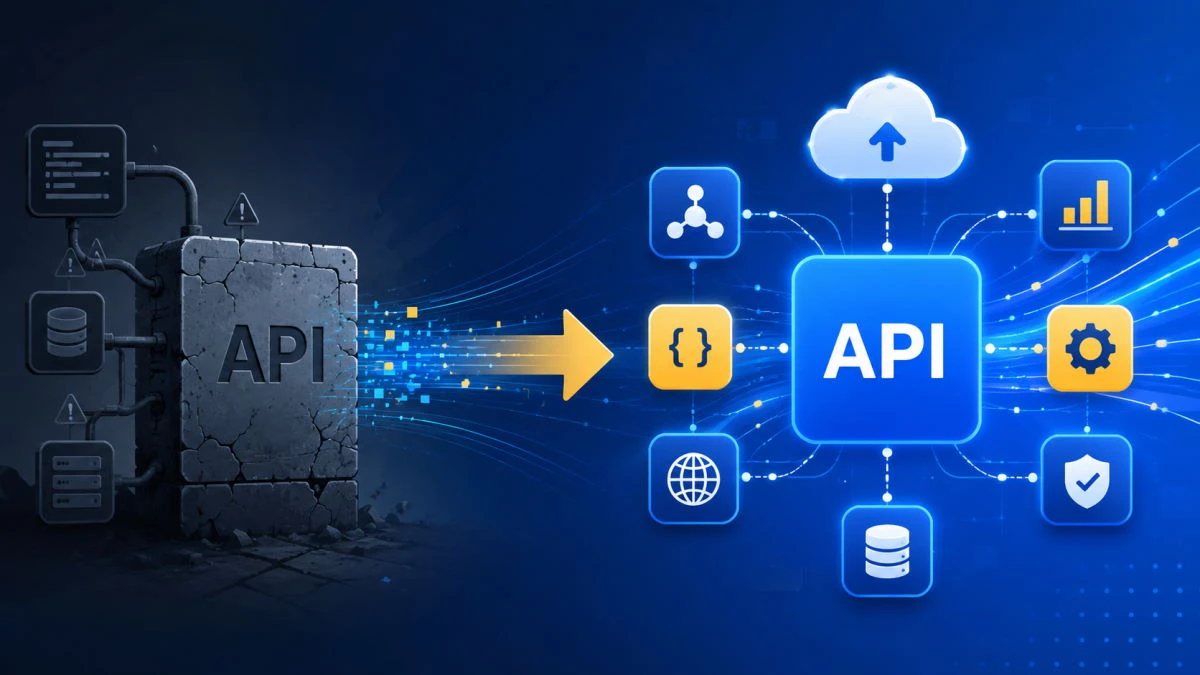
Qualitative API modernization is so much more than swapping frameworks or rewriting endpoints. It refers to restructuring how your system handles data flow, manages load, and communicates across services.
At PLANEKS, API modernization development services focus on the constraints that matter: latency under concurrent traffic, data consistency across distributed components, and the ability to grow without rewriting everything. We work with Django, FastAPI, Celery, PostgreSQL, and Redis – each handling a specific class of problems that legacy API systems inevitably run into.
Issues We Face Frequently
Challenges We Solve
Most teams contact us when their system still works, but incidents are becoming harder to dismiss: slow responses under real load, silent failures, and changes that create problems in places they shouldn’t touch. Pages load slowly under real traffic, integrations fail silently, and every small change risks breaking some unrelated parts of your platform; these are the patterns we see most often.
Performance Bottlenecks Under Real Load
Data Consistency Across Distributed Systems
Tight Coupling Blocks Any Change
Third-Party Integrations Become Unmanageable
Our Approach
What We Do When We Modernize APIs
The approach of our Python development agency diverges from the industry. We follow a data-first scaling principle validated across many of our successful projects.
Re-Architect API Layers for Scalability
Build Controlled Data Flow Systems
Introduce Async Processing Where It Matters
Isolate External Dependencies
Gradual Legacy Refactoring Without Full Rewrite
How We Modernize APIs Without Breaking Your System
Our Benefits
Production systems cannot afford downtime for architectural experiments. Every step of our API modernization development services is designed to reduce risk.
Why Modernization Fails with Most Vendors
Most API modernization consulting services follow a predictable pattern: audit endpoints, pick a framework, rewrite, and deploy. We’ve seen how this results in a new codebase that inherits all the old architectural problems. Due to this, our approach redesigns at the system level, covering how data flows, where processing happens, and what scales independently. We move synchronous inline calls into asynchronous task pipelines (Celery, SQS, Dramatiq) and build systems your team can extend without our engagement.
Our Python Technology Stack
Engineering Stack and Tools




Redis

PostgreSQL

Celery
Architecture Decisions
API Architectures We Build
We work across different API architecture patterns and select the right one based on how the system performs under load, how the team operates, and what the long-term maintenance looks like.
3 Types
In practice, within one of our API modernization projects, a SaaS platform’s integration layer handled hundreds of partner APIs through a single monolithic service. We moved to a modular, event-driven architecture where each integration runs independently – failures in one no longer affect the rest.
How we do it
API Modernization for Real Systems
At PLANEKS, our modernization looks different depending on what the system actually handles. Here is where we apply API modernization development services most often, and what the work typically involves.
Frequently Asked Questions
FAQ
The questions below come up in almost every initial conversation we have about API modernization development services – so we wanted to answer them upfront, the same way we would on a discovery call.
How long does API modernization take?
Do we need to rewrite everything?
What if our team is small?
Scaling API Systems Over Time
A system that works for five developers and a hundred thousand daily requests will not survive fifty developers and ten million requests without architectural changes. We design APIs with team growth (clear service boundaries, independent deployability), workload growth (horizontal scaling, queue-based processing), and operational complexity (observability, runbooks) built in. We deliver a system your team can scale confidently, without requiring a vendor every time traffic doubles.
Case studies
Proud projects make us excel


Testimonials
What do people praise about PLANEKS?
If your APIs are slowing down, breaking under load, or blocking your team from shipping – we can help. Our engagement starts with a system audit, bottleneck analysis, and architecture plan, so you start the project with a defined scope, prioritized risks, and measurable outcomes. Schedule a call today to discuss your system, your bottlenecks, and the fastest roadmap to a stable, scalable API that supports your business reliably.

Andras Marozsi
Finding competent automation engineers who produce a high quality code was very challenging, most other candidates just automatically started to add timeouts when they faced an issue. Candidates who PLANEKS offered had a much more mature approach, started with understanding the challenge and then provide a proper solution. I am happy to refer PLANEKS to any friend who needs reliable contractors.

Gabriel Yarra
Results were exactly what I wanted. PLANEKS was very flexible and able to quickly accommodate many requests. The fulfilled all phases of the project, and the result was a working application. Clear communication with no miscommunications or confusion. Professionals. Easy to work with!

Antoine Falisse
I am happy with PLANEKS’ services. The team’s project management is great, and their resources always meet deadlines. Communication is great too. I feel they’re a part of my team and really care about the project. Overall, the partnership has been truly successful.

Anonymous (Financial App)
What we found most impressive about PLANEKS was their exceptional ability to seamlessly integrate complex financial and technical components, delivering a user-friendly solution that met our needs effectively. Their dedication to both project management and customer service set them apart, ensuring that every aspect of our collaboration, from development to issue resolution, was handled with the utmost professionalism and responsiveness. This combination of technical prowess and exceptional service made them a unique and outstanding partner.

Marissa Huggins
PLANEKS did deliver projects on time and we are extremely happy with our services to-date. Not only has Anton been extremely kind in helping us navigate many time zones and work cultures, the engineers assigned have always been extremely professional and complete their work relatively as requested and on time. This is the most thorough and considerate engineering team we have ever outsourced by far. While there are still some gaps around communication and expectations for deliverables,this has been our best experience with offshore work yet.

Turi Mercuri
PLANEKS was ahead of schedule and built far more advanced than expected! What did I find most impressive or unique about this company? Professionalism, efficiency, clear communication and willingness to think outside the box to complete the tasks within fewer hours and at a higher standard than expected!! I will be working with PLANEKS for any future software development.

James Plowright
They meet their customer promises and communicate well. Anton is a great project manager and communicator, as a non-tech product owner I’ve found that he’s played an integral role in filling in the gaps to ensure there’s product design and technology alignment. We are due to launch soon and excited to start collecting feedback!

Daniel Smith
The projects have been completed on time and within budget. PLANEKS made sure that everything goes smoothly. Communication is excellent. They are happy to integrate with our existing tools and processes to communicate on projects. Furthermore, PLANEKS are open and honest about their capacity and capabilities.

Chloe Dagenais-Mignault
Our app needs quite specific knowledge and there is a big learning-curve, to which they have adapted quickly. Every deliverable has been finished in time and with great quality. All expectations were met and beyond. We really like PLANEKS’s teamwork and ability to understand complex business problems, business logic and how to efficiently address those problems in our code.
5.0/5.0
Blogs & news
Interesting articles regularly updated

Top 10 Python Developers in Ukraine
Explore the best Python development companies in Ukraine, highlighting their expertise, services, projects worth your attention, and what makes each partner stand …

Python vs JavaScript for Web Development
The practical differences of Python vs JavaScript for web development so you can make the right call for your project. …