












Python API Development Services

planek
planek
planek
planek
planek
planek
planek
planek
planek
planek
planek
planek
planek
planek
planek
planek

    Build your API with experts
    Get expert help designing and developing your API solution

    At PLANEKS, we implement Python APIs that help businesses of all sizes enhance their products’ capabilities, ensure highly resilient integrations, and scale smoothly on a robust, solid backend.Ā Ā 

    Our custom API development services include REST APIs, GraphQL, and event-driven architectures for startups deploying their first product to market and for enterprises that need to optimize years of accumulated integrations. Our crucial goal is to arm your software ecosystem with an API that cleanly connects your systems, handles dynamic workload, and gives your team room to add, change, and extend your solutions. Our architecture roadmap is established on security, performance, and scalability to ensure absolute protection and compliance at every layer and flow of your product.

    api development services

    Custom API development services

    Our services

    We cover the full range of backend API development and integration services, including from-scratch implementations and enhancing systems that have long outgrown their original design. Having deep experience across every product stage, we successfully handle technical complexity and deliver within the required scope and timeline.

    REST API Development with Python

    REST API development remains a relevant and time-tested solution for many software products, and we are adept at creating seamless, consistent, and well-documented Python REST APIs. PLANEKS adheres to the solid engineering discipline from the outset, so your API is maintainable and scalable when the product grows.

    GraphQL API Development

    In case your frontend needs precise control over what data it fetches, GraphQL is a suitable tool, giving clients the ability to query exactly what they need from multiple sources in a single request. We design schemas that are intuitive to work with and optimized for performance, ensuring query flexibility doesn’t impact response times.

    Third-Party API Integrations

    Our team interconnects your product with payment gateways, CRMs, logistics platforms, communication tools, data providers, and other external services your business depends on, handling authentication, error management, and edge cases efficiently.
    Python API Integration Services

    Microservices Architecture

    When a monolith starts slowing your team down, splitting it into independent, API-driven services can be the right choice, but only if it’s executed by the professional tech team. We help you decompose complex systems incrementally, keeping existing functionality stable and operational throughout the process.
    Python Microservices Development Services

    Legacy API Modernization

    Outdated APIs shouldn’t be a permanent setback for your tech ecosystem. We can modernize legacy systems layer by layer, updating architecture, improving security, and coordinating the codebase and API contracts with current standards without introducing downtime or breaking what your users depend on.
    API Modernization Services

    API Performance Optimization

    API performance degradation can have heavy business consequences, impacting user retention and revenue. As part of our custom API development services, we follow a time-tested optimization strategy - identify bottlenecks at every layer, investigating database queries, caching, async handling, payload size, and handling them before production.
    Start your API project

    We take over the full development life cycle, from design through deployment and monitoring. For you, this means partnering with a dedicated team responsible across every phase, ensuring seamless delivery and support. If your business depends on reliable data exchange, smooth third-party integrations, or a backend that requires support growth, that’s the exact problem we’re set up to address.

    Benefits of Python for API

    Why choose Python for API development?

    Python is one of the strongest technologies for backend API development. We work with it as our primary backend language, leveraging its rich ecosystem, frameworks, and libraries. It is highly efficient at building APIs that reliably handle production traffic, connect seamlessly with external systems, and remain secure without repeated fixes.

    Speed of Development

    Frameworks such as FastAPI, Django REST Framework, and Flask provide engineers with a solid toolkit to optimize workflows. FastAPI, in particular, is specialized for a modern API development service, handling automatic validation, async support, and generated documentation out of the box.

    Scalability and Performance

    Python's async capabilities (native in FastAPI and well-supported in Django) allow APIs to handle high concurrency without linear infrastructure scaling. Supported by clean architecture patterns and natural microservices compatibility, Python backends stay performant when request volume grows.

    Security and Reliability

    Python's major frameworks comprise tried-and-true implementations for OAuth2, JWT authentication, rate limiting, and input validation, which are the crucial security layers every production API requires.

    Ecosystem and Integrations

    Python has mature library support across most backend integration categories, comprising data processing, message queuing, payment protocols, ecommerce platforms, and workflow automation. In practice, this means fewer custom implementations, better-tested integration code, and streamlined delivery on projects with complex third-party dependencies.

    How we do it

    Our API Development Process

    We have a well-structured flow within our custom API development services, making sure each step from an initial conversation to a production-ready system delivers maximum value for your business and ensures the expected outcomes.

    1

    Discovery and Requirements Analysis

    Our cooperation typically starts with comprehending your business goals, existing infrastructure, integration requirements, and expected traffic. Thus, we can define the most appropriate architecture and roadmap for your specific case.
    2

    Architecture and API Design

    Before proceeding with implementation, we define the structure following API-first principles: RESTful standards, OpenAPI/Swagger documentation, versioning strategy, and data contracts. As a result, we achieve a shared technical base that guides subsequent implementation decisions.
    3

    API Development

    The implementation phase of API development service covers Python backend development, database modelling, and authentication configuration, executed against the agreed technical specification, with structured code reviews and regular progress reporting throughout.
    4

    Testing and QA

    The stage covers unit tests, integration tests, load testing, and security validation for each endpoint and integration element. Delivery contains only verified and thoroughly tested code.
    5

    Deployment

    We configure CI/CD pipelines, Docker containerization, and cloud infrastructure across AWS, GCP, or Azure based on your existing setup and requirements. The process is standardized and fully predictable.
    6

    Monitoring and Optimization

    Having configured logging, performance tracking, and scaling strategies throughout the build, this stage focuses on final verification. We ensure full visibility into your API's behavior in production is in place before go-live, so issues are trackable and can be eliminated as soon as they arise.

    How much does API development cost?

    API Development Cost Calculator

    One of the initial questions we hear from clients is “What will the service actually cost?” The honest answer is that the pricing varies due to specific factors. Schedule a consultation with our custom API development company, and we’ll walk you through a detailed estimate based on your specific requirements.

    GET STARTED

    0$

    Thanks, we will contact you soon

    1

    What type of API do you need?

    You need to select an item to continue

    2

    How many endpoints will the API have?

    You need to select an item to continue

    3

    What level of authentication and security do you need?

    You need to select an item to continue

    4

    Will the API need to integrate with third-party services?

    You need to select an item to continue

    5

    What data storage solution do you need?

    You need to select an item to continue

    6

    Do you need rate limiting and traffic management?

    You need to select an item to continue

    7

    Will the API require real-time capabilities?

    You need to select an item to continue

    8

    What kind of API documentation do you need?

    You need to select an item to continue

    9

    Will the API require automated testing?

    You need to select an item to continue

    10

    Do you need deployment and hosting services?

    You need to select an item to continue

    11

    Do you need ongoing support and maintenance?

    You need to select an item to continue

    2 (1)

    How many endpoints will the API have?

    You need to select an item to continue

    Final Step

    Summary

    Description Information Quantity Price
    Discount :
    Total :

    Complexity of Business Logic

    An API that handles basic data retrieval is a drastically different project from one managing multi-tenant access control, sophisticated business requirements, and hundreds of interconnected workflows.

    Number of Endpoints

    More endpoints require longer development, testing, and documentation. Scope clarity here directly establishes your budget.

    Third-Party Integrations

    Every external service added to the set of integrations (such as payment processors, CRMs, and data providers) introduces its own complexity, error handling, and testing requirements.

    Security Requirements

    APIs handling sensitive data, custom authentication flows, or strict compliance requirements (HIPAA, PCI DSS, GDPR) require higher engineering effort at the architecture, implementation, and testing stages.

    Expected Traffic Volume

    High-concurrency requirements have a direct impact on architecture and infrastructure decisions. Async I/O handling, horizontal scaling strategy, load balancing, and caching extend the engineering scope.

    Cloud Infrastructure

    Your choice of cloud provider, hosting model, and scaling strategy directly affects infrastructure costs. Multi-region deployments, managed services, and auto-scaling configurations need to be scoped accurately.

    CASE STUDIES

    Proud projects make us excel
    Industries we build APIs for

    Our industries

    Bespoke API development varies substantially by industry, with data models, compliance requirements, and integration landscapes varying widely. We’ve been working across a broad diversity of domains to understand the requirements of each one.

    Fintech

    Payment processing, transaction histories, fraud detection, open banking integrations, as part of fintech APIs, handle sensitive data at high volume and require resilient security and compliance. Our fintech API implementations are created to satisfy these requirements.
    Fintech Integration Services

    Hospitality

    Hospitality products run on integrations for booking engines, property management systems, channel managers, and guest communication tools. Here, we make sure APIs connecting them are fast and dependable.
    Hospitality API Integration Services

    Insurance

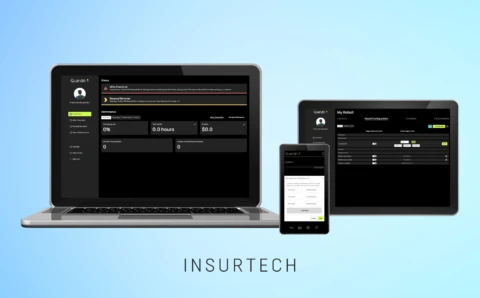
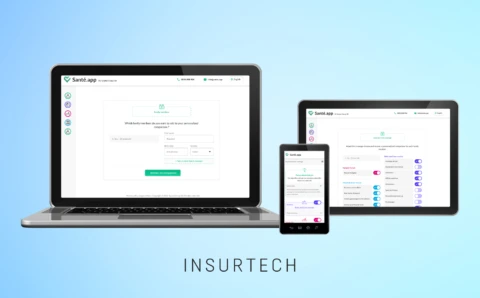
    Insurance workflows are complex, heavily regulated, and rarely forgiving of data inconsistencies. We build APIs that handle policy management, claims processing, and third-party data lookups with the accuracy and audit trail that those environments require.
    Insurance API Integration Services

    eCommerce

    Product catalogues, inventory sync, order management, payment gateways - ecommerce APIs need to handle traffic spikes without breaking and integrate cleanly with the platforms your business already uses.
    eCommerce API Integration Services

    Logistics

    Logistics APIs handle shipment tracking, route optimization, warehouse management, and carrier integrations, often under high request volumes. With PLANEKS, you can hire a Python API developer to create systems that are resilient when volumes spike and integrations grow.
    Fleet Management API Integration Services

    Healthcare

    Healthcare APIs have a high focus on data integrity, security, and regulatory compliance. To this end, we handle patient data, appointment scheduling, and EHR integrations in accordance with the architecture and validation practices required by HIPAA and similar standards.
    Healthcare API Integration Services

    Development principles

    API Security and Compliance

    The APIs we configure handle unauthorized access, traffic abuse, and edge cases without compromising availability or exposing sensitive data in the process.

    Data Encryption

    All data in transit is encrypted using TLS, and sensitive data at rest is protected by appropriate encryption standards. In these terms, we never rely on out-of-the-box settings for this.

    Authentication and Authorization

    PLANEKS engineers implement OAuth2, JWT, and API key-based authentication depending on what your use case requires. Access control is granular, so the right users and services get access to exactly what they require, respectively, according to their role and needs.

    GDPR Compliance

    For APIs handling European user data, we design with GDPR compliance as a technical requirement, covering data minimization, explicit consent management, right-to-erasure implementation, storage limitation, and purpose limitation at the data processing level.

    Audit Logging

    Every significant action through your API is logged, timestamped, and attributed to the responsible user or service. In case an incident occurs or a compliance audit requires documentation, you are all set with a complete, traceable record to reference.

    Rate Limiting and Abuse Protection

    Rate limiting, request validation, and abuse detection are implemented as standard across every API we build. Your endpoints remain available to legitimate traffic even if there are brute-force attempts, scraping, or spikes in unexpected request volume.

    API development solutions

    Modernization and Legacy API Refactoring

    When products scale and requirements change, the API design that was relevant for the purpose at the time of implementation often becomes a technical liability. We aim to modernize those systems incrementally without disrupting production operations.

    Migrating Monoliths to Microservices

    Monolith-to-microservices migration is one of the most complex engineering efforts. We approach it iteratively, by stages - identifying the right boundaries, extracting services one at a time, and keeping the existing system functional throughout. The migration is handled without full system rewrites or extended production downtime at any stage.

    Improving Performance

    Sometimes the architecture is fine, but the implementation doesn't perform to its potential. We profile existing APIs, identify bottlenecks - whether in query design, caching strategy, or unnecessary synchronous calls, and ensure targeted fixes at the source.
    Hospitality API Integration Services

    Refactoring Outdated Frameworks

    Older Flask or Django codebases that predate modern async patterns, typing, or security standards can be modernized without a full rewrite. For this, our API development agency can update outdated dependencies, synchronous patterns, and deprecated security implementations without touching what's already performing reliably in production.

    API Gateway Implementation

    We handle the gateway implementation as part of our modernization work, ensuring your API infrastructure has a coherent entry point, centralizes authentication, rate limiting, routing, and monitoring across your services.

    TECHNOLOGIES WE USE

    Technologies we use for API development

    The technologies we’ve adopted for our tech services were chosen as a resilient, time-tested toolkit. Discover what our Python API development stack typically looks like in practice.

    Frameworks

    FastAPI is our go-to for most modern API configurations - async by default, fast, and great for high-concurrency services and data-intensive apps. Django REST Framework is the right option for projects with complex data models, admin requirements, and well-established business logic. Flask handles lighter-weight services and internal tooling, with high simplicity and low overhead.
    FastAPI Development Services

    Databases

    PostgreSQL is the standard for relational data - reliable, feature-rich, and robust in handling complex queries and vast datasets without performance degradation. MySQL comes in handy for us when client infrastructure or existing systems require it, especially in eCommerce and CMS-heavy environments. Redis manages caching, session storage, and real-time data retrieval, being effective in high-throughput environments where in-memory access speed directly impacts API response times.

    Infrastructure and Deployment

    Docker keeps environments consistent from development through to production, eliminating the configuration inconsistencies that may cause deployment issues. Kubernetes manages container orchestration for services that require automated scaling, fault tolerance, and high availability. For cloud infrastructure in Python API development, we use AWS, GCP, and Azure - whichever your team already uses or makes the most sense for your architecture and compliance requirements.

    Plan your API architecture

    Need a scalable API? Let’s discuss your requirements today.

    INDUSTRIES WE HAVE DEEP EXPERTISE IN

    Frequently asked questions

    Some of the most common questions we receive about our web API development services – answered concisely, for your better guidance.

    How long does API development take?

    The timeline is based on the scope, but a straightforward REST API development can be ready for deployment in a few weeks. More complex configurations, like multiple integrations, customized authentication flows, and high-availability infrastructure, may take longer. Our custom API development company ensures you with practical milestones after the discovery phase.

    How much does a custom API cost?

    The required budget is also an individual aspect for each project. Cost depends on complexity, number of endpoints, integrations, security requirements, and infrastructure needs. A simple REST API with basic CRUD endpoints typically starts from $3,000-$8,000 and can be delivered within 3-6 weeks, while a mid-complexity API with authentication, several integrations, and custom business logic generally falls in the $10,000-$30,000 range with a 6-14 week timeline. Enterprise-grade solutions with advanced security, high scalability, and multiple service integrations are scoped individually, typically from $40,000 upward. With PLANEKS, you are guaranteed a transparent estimate and a range of flexible cooperation models, suitable for your requirements, internal structure, and financial parameters.

    Why use Python for backend APIs?

    Python has a mature ecosystem, excellent frameworks, strong async support, and seamless scalability. It reduces time-to-market, keeps codebases easy to support in the long run, and connects smoothly with data processing and automation tooling. For most API projects, it's the most resilient and commercially practical technology.

    Can you integrate with legacy systems?

    Of course, it's a huge part of our experience. Connecting to SOAP services, outdated databases, or bridging legacy systems with a modern API layer are scenarios we encounter regularly. We know where the complications arise and how to handle them efficiently.

    Testimonials

    What do people praise about PLANEKS?

    Get in touch with our professionals. Tell us about your API requirements, and we’ll review your integration challenges to outline a solution that fits your infrastructure and improves operational efficiency across your entire product ecosystem.

      Let's help you!

      It's out pleasure to have a chance to cooperate.

      crm api integration
      ecommerce apis